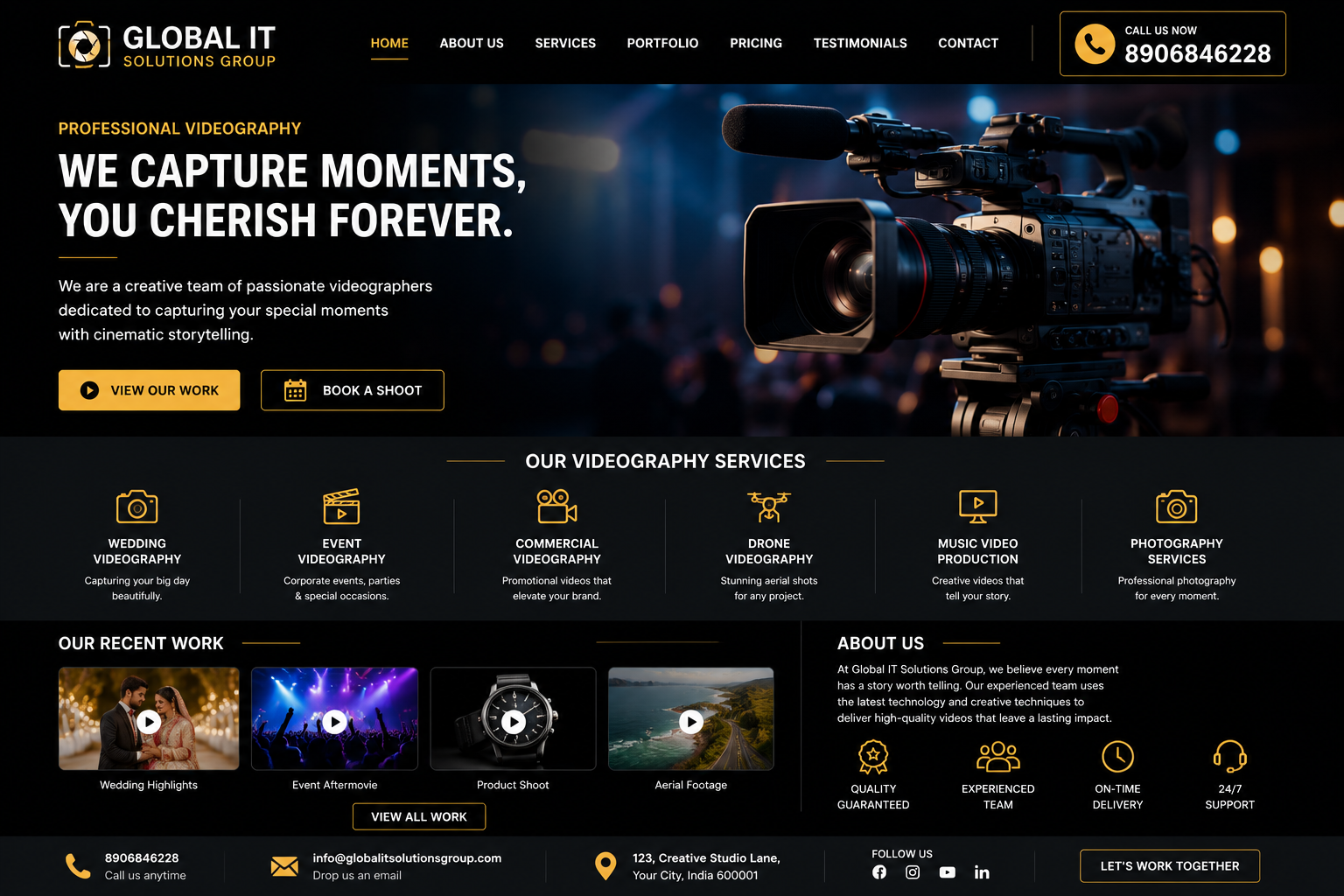
Videographer Website Design: Complete Guide to Build a Professional Video Portfolio Website
In today’s visual-first digital world, videographers need a professional website to showcase their creativity, attract clients, build credibility, and grow their business online. Whether you are a wedding videographer, commercial filmmaker, YouTube creator, drone videographer, event videographer, documentary filmmaker, or freelance video editor, your website acts as your online portfolio and marketing platform.
A professionally designed videographer website helps potential clients understand your style, view your work, contact you easily, and trust your expertise. Since video production is highly competitive, a visually appealing and SEO-optimized website can help you stand out from other creators and generate consistent business inquiries.
This complete guide explains everything about videographer website design, including important features, SEO optimization, branding strategies, portfolio presentation, mobile responsiveness, lead generation, and best practices for building a high-converting videography website.
Why Videographers Need a Professional Website
Social media platforms are useful for sharing videos, but they are not enough for long-term professional growth.
A personal videography website helps:
- Showcase video portfolios professionally
- Build trust and authority
- Attract direct clients
- Improve Google rankings
- Generate leads organically
- Display testimonials
- Promote services
- Sell video packages
- Build personal branding
- Create long-term online visibility
Your website becomes the central hub for your creative business.
Benefits of Videographer Website Design
1. Professional Portfolio Presentation
A website allows videographers to showcase their best work without distractions from competitors or social media algorithms.
You can organize projects by:
- Weddings
- Commercial shoots
- Corporate videos
- Music videos
- Real estate videos
- Drone cinematography
- Events
- Travel films
Professional portfolio presentation increases conversion rates.
2. Better Client Trust
Clients prefer videographers with professional websites because they appear more credible and experienced.
A strong online presence builds confidence before clients contact you.
3. Improved Google Visibility
SEO optimization helps your videography website rank on Google for relevant searches.
Examples include:
- Wedding videographer near me
- Professional videographer
- Corporate video production
- Drone videography services
- Event videographer
Organic search traffic can generate long-term leads.
4. Strong Personal Branding
Your website reflects your visual style, personality, and filmmaking expertise.
Strong branding helps people remember your work.
Essential Features of Videographer Website Design
A successful videography website should combine beautiful visuals, fast performance, SEO optimization, and excellent user experience.
Professional Homepage Design
The homepage creates the first impression.
It should quickly communicate:
- Who you are
- What type of videos you create
- Your unique style
- How clients can contact you
Important homepage sections include:
- Hero video banner
- Personal introduction
- Featured projects
- Client testimonials
- Services overview
- CTA buttons
- Social media links
- Contact section
Example headline:
“Cinematic Video Production That Brings Stories to Life”
High-Quality Video Portfolio
Your portfolio is the most important section of your website.
Display your best work using:
- Embedded videos
- Showreels
- Highlight reels
- Full project galleries
- Case studies
- Behind-the-scenes footage
Organize projects into categories for easier browsing.
Mobile-Friendly Videographer Website Design
Most users browse websites on smartphones and tablets.
A responsive website ensures:
- Better mobile experience
- Faster loading
- Improved SEO rankings
- Higher engagement
- Better conversions
Your website should function smoothly across all devices.
Fast Website Loading Speed
Video-heavy websites can become slow if not optimized properly.
Slow websites reduce engagement and hurt SEO rankings.
Ways to improve performance:
- Compressed videos
- Optimized images
- Fast hosting
- Lazy loading
- CDN integration
- Lightweight coding
Fast websites improve user experience significantly.
SEO Optimization for Videographer Websites
SEO helps videographers attract organic traffic from Google.
A properly optimized website can generate consistent inquiries without depending entirely on social media.
Important Videography SEO Keywords
Examples include:
- Videographer website design
- Wedding videographer website
- Video production company website
- Corporate videographer
- Event videography services
- Drone videographer
- Professional filmmaker website
- Freelance videographer portfolio
Use keywords naturally in:
- Titles
- Meta descriptions
- URLs
- Headings
- Blog content
- Video descriptions
Local SEO for Videographers
Many videography businesses target local clients.
Examples:
- Wedding videographer in Kolkata
- Event videographer in Mumbai
- Corporate video production in Delhi
- Drone videography in Bangalore
Local SEO strategies include:
- Google Business Profile
- Location-based keywords
- Client reviews
- Google Maps integration
- Local backlinks
Local SEO helps generate nearby business inquiries.
About Page for Personal Branding
The About page helps visitors connect with you personally.
Include:
- Your filmmaking journey
- Experience
- Awards and achievements
- Equipment expertise
- Creative philosophy
- Team introduction
Storytelling builds emotional connection and trust.
Service Pages
Create dedicated pages for every service.
Examples include:
- Wedding videography
- Corporate video production
- Event filming
- Real estate videography
- Drone filming
- Music video production
- YouTube video editing
- Commercial advertisements
Dedicated pages improve SEO and conversions.
Online Booking and Inquiry Forms
Your website should make it easy for clients to contact you.
Important features include:
- Inquiry forms
- Booking requests
- WhatsApp integration
- Consultation scheduling
- Email contact buttons
Simple communication systems increase inquiries.
Testimonials and Client Reviews
Reviews build credibility and trust.
Display:
- Written testimonials
- Video testimonials
- Client logos
- Event success stories
- Ratings and feedback
Social proof improves conversion rates.
Best Color Schemes for Videographer Websites
Popular videography website colors include:
- Black for cinematic style
- White for minimalist branding
- Gold for luxury wedding branding
- Gray for modern design
- Dark blue for professionalism
Colors should match your filmmaking style.
User-Friendly Navigation
Simple navigation improves browsing experience.
Recommended menu structure:
- Home
- About
- Portfolio
- Services
- Blog
- Testimonials
- Contact
Easy navigation helps visitors find content quickly.
Importance of Blogging for Videographers
Blogging helps videographers improve SEO and authority.
Useful blog topics include:
- Wedding videography tips
- Best cameras for filmmaking
- Video editing tutorials
- Drone filming techniques
- Event filming guides
- Cinematic storytelling
- Lighting setup tips
Blogs increase search engine visibility over time.
Call-to-Action Buttons
Strong CTAs improve conversion rates.
Examples include:
- Book Your Shoot
- Get Free Quote
- Contact Now
- Watch Showreel
- Schedule Consultation
Place CTAs strategically throughout the website.
Social Media Integration
Social media is important for video creators.
Integrate platforms such as:
- YouTube
- TikTok
- Vimeo
Social integration helps expand audience reach.
Videographer Website Design Trends
Modern videography websites use advanced design trends such as:
- Full-screen video backgrounds
- Cinematic animations
- Dark mode
- Interactive galleries
- Minimal layouts
- Motion graphics
- Storytelling sections
- Mobile-first interfaces
Modern visuals improve audience engagement.
Security Features for Videography Websites
Your website should include:
- SSL certificates
- Secure hosting
- Spam protection
- Backup systems
- Firewall security
Security improves trust and protects business data.
Custom Videographer Website Design vs Templates
Custom-designed websites offer:
- Unique branding
- Better SEO
- Faster speed
- Stronger portfolio presentation
- Improved scalability
- Better user experience
Custom websites help videographers stand out professionally.
Conversion Optimization Tips
To increase bookings and inquiries:
- Use strong headlines
- Display your best videos first
- Simplify inquiry forms
- Improve loading speed
- Add testimonials
- Use visible CTAs
- Optimize for mobile
Conversion optimization increases website ROI.
Common Videographer Website Mistakes
Avoid these common issues:
Slow Video Loading
Heavy video files can reduce performance.
Weak Portfolio Organization
Poor presentation reduces engagement.
No SEO Optimization
Without SEO, potential clients may not find your website.
Poor Mobile Experience
Mobile users expect smooth browsing.
Cluttered Design
Too many effects can distract visitors.
Missing Contact Information
Clients should contact you easily.
Best Pages for Videographer Websites
Important pages include:
- Home
- About
- Portfolio
- Services
- Blog
- Testimonials
- FAQ
- Contact Us
- Privacy Policy
Well-structured pages improve SEO and user experience.
Why WordPress is Popular for Videographer Websites
WordPress is widely preferred because it offers:
- Portfolio flexibility
- SEO plugins
- Video embedding
- Mobile responsiveness
- Easy customization
- Blogging support
WordPress works well for creative professionals.
AI and Automation for Videography Websites
Modern videography websites increasingly use:
- AI chatbots
- Smart inquiry systems
- Automated scheduling
- Personalized recommendations
- Email automation
Automation improves client management and efficiency.
Analytics and Performance Tracking
Analytics tools help videographers understand audience behavior.
Track:
- Website traffic
- Popular videos
- Conversion rates
- Inquiry sources
- User engagement
Google Analytics and Search Console are highly useful.
Choosing the Right Videographer Website Design Company
Before hiring a designer or agency, check:
- Creative portfolio quality
- SEO expertise
- Mobile responsiveness
- Video optimization experience
- Branding capability
- Technical support
A professional web design partner can help build a strong online presence.
Future of Videographer Website Design
Videography websites continue evolving with technology.
Future trends include:
- AI-generated video previews
- Interactive storytelling
- Voice search optimization
- Virtual reality integration
- Personalized content experiences
- Advanced motion design
Modern videographers must adapt to digital trends to remain competitive.
Conclusion
A professional videographer website is essential for building credibility, showcasing creativity, attracting clients, and growing a successful video production business. A high-quality videography website combines stunning visuals, strong branding, SEO optimization, fast performance, mobile responsiveness, and excellent user experience.
Whether you are a wedding filmmaker, corporate videographer, drone operator, or freelance video creator, your website should reflect your cinematic style and professional expertise. Investing in a professionally designed videographer website can significantly improve your visibility, bookings, and long-term business growth.
FAQs – Videographer Website Design
1. Why does a videographer need a website?
A website helps videographers showcase portfolios, attract clients, build credibility, and improve online visibility.
2. What should a videographer website include?
Important sections include portfolio, services, testimonials, about page, blog, and contact forms.
3. Is SEO important for videographer websites?
Yes. SEO helps videographers rank on Google and generate organic traffic.
4. Should videography websites be mobile-friendly?
Absolutely. Most visitors browse websites using smartphones and tablets.
5. What platform is best for videographer websites?
WordPress is highly popular because it supports video portfolios, SEO tools, and customization.
6. Why is portfolio presentation important?
A strong portfolio demonstrates creativity and filmmaking skills to potential clients.
7. How can videographers generate leads online?
Through SEO, social media, blogging, Google Business Profile, and optimized inquiry forms.
8. Why are testimonials important?
Testimonials build trust and improve conversion rates.
9. What colors work best for videographer websites?
Black, white, gold, gray, and dark blue are popular choices depending on branding style.
10. Is custom website design better than templates?
Yes. Custom websites provide unique branding, better SEO, improved speed, and stronger portfolio presentation.
Call : +91 8906846228
Our Services
Website & Mobile App Development
Mobile App Development
Digital Marketing
Search Engine Optimization (SEO)
Software Development
IT Solutions
Recent Post