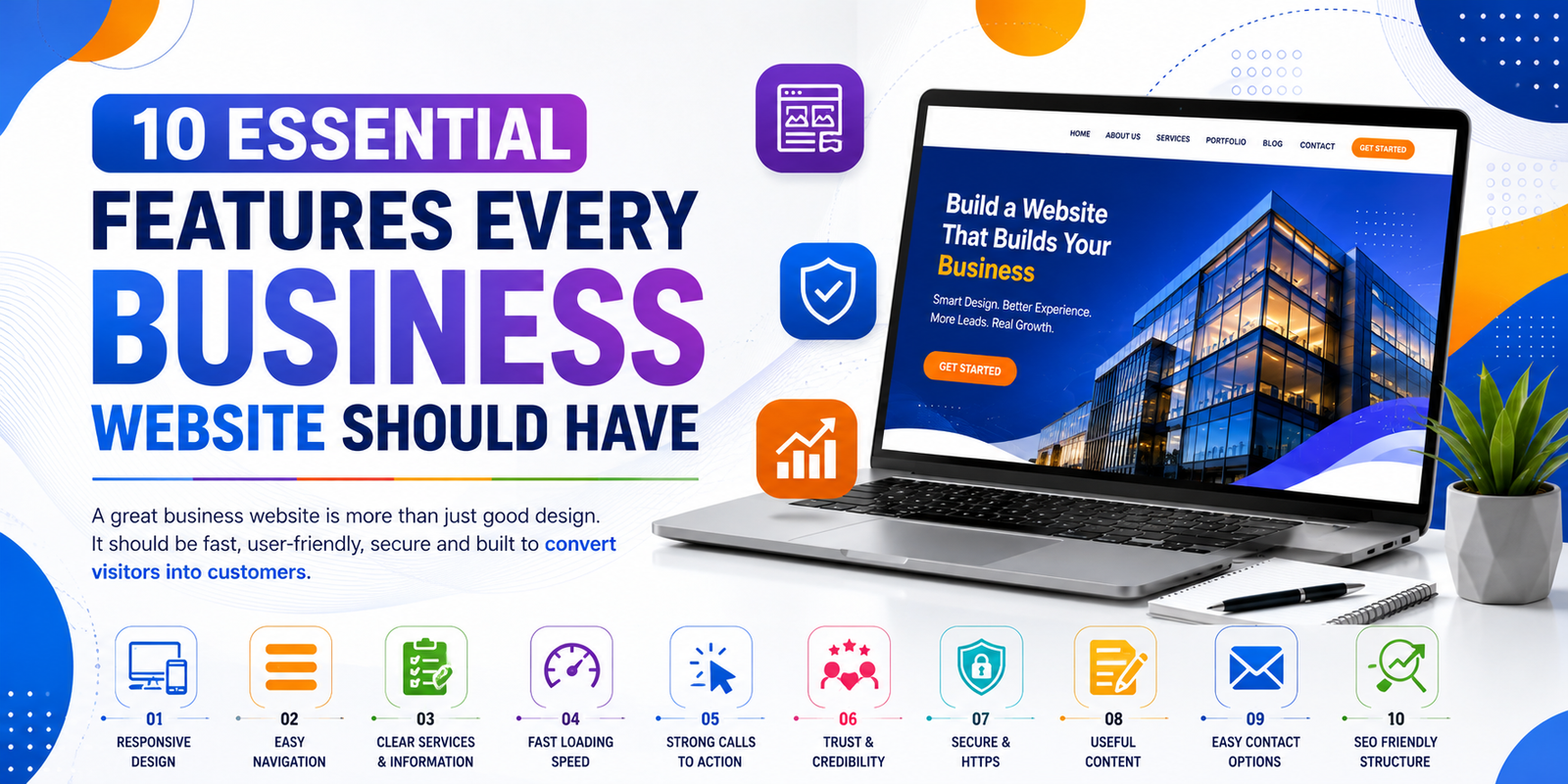
10 Essential Features Every Business Website Should Have
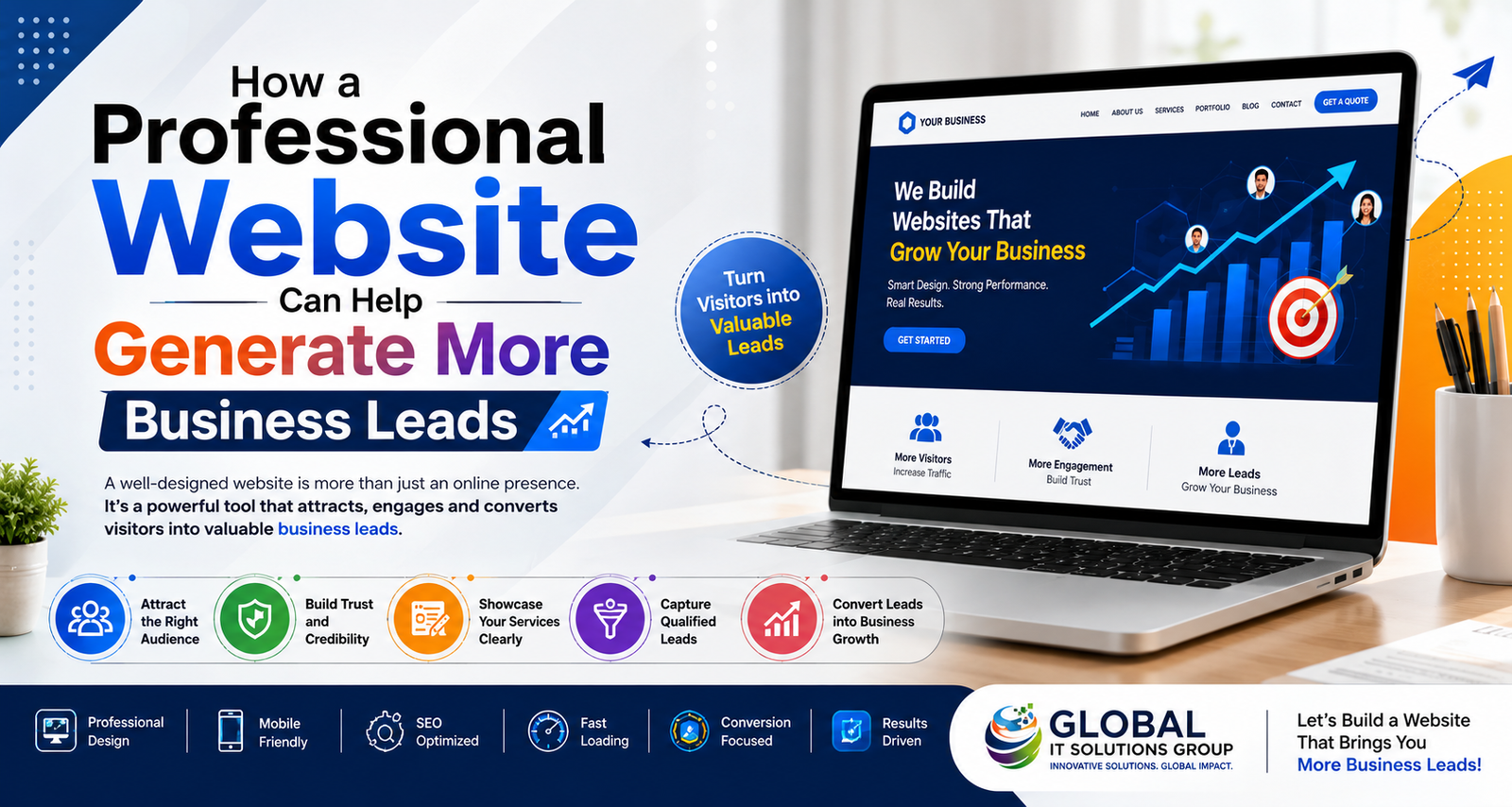
A business website is often the first place potential customers go to learn about a company. Whether someone discovers your business through a search engine, social media, an online advertisement, or a recommendation, your website gives them an opportunity to understand your services and decide whether they want to contact you.
However, simply having a website is not enough. A successful business website should be easy to use, informative, trustworthy, mobile-friendly, and designed around the needs of its visitors. It should answer common questions, explain what your business offers, and make it simple for potential customers to take the next step.
At Global IT Solutions Group, we believe a professional website should combine attractive design with practical functionality. Here are ten essential features that every modern business website should consider.
1. Responsive and Mobile-Friendly Design
People access websites from a wide range of devices, including smartphones, tablets, laptops, and desktop computers. A business website therefore needs to work properly across different screen sizes.
Responsive web design allows a website’s layout and content to adapt to the device being used. Text should remain easy to read, images should display correctly, menus should be simple to use, and buttons should be comfortable to tap on smaller screens.
A mobile-friendly website can also provide a better experience for people searching for your business while they are away from their computers.
For example, a potential customer might discover your company through a mobile search and immediately visit your website. If the website is difficult to navigate on a phone, that visitor may leave before learning about your services.
Responsive design is therefore not just a visual feature. It is an important part of providing a convenient customer experience.
2. Clear and Simple Navigation
Website visitors should be able to find important information without having to search through multiple confusing pages.
Clear navigation helps visitors understand where they are and where they can go next. A typical business website may include sections such as:
- Home
- About Us
- Services
- Products
- Portfolio
- Blog
- Frequently Asked Questions
- Contact
The exact structure depends on the business, but the principle remains the same: keep navigation logical and easy to understand.
Dropdown menus can be useful for businesses with many services, but they should not become unnecessarily complicated. Important pages should generally be accessible with minimal effort.
Good navigation also helps search engines understand the structure and relationship between different pages on a website.
3. Clear Information About Your Products or Services
One of the main reasons people visit a business website is to understand what the company offers.
Your services or products should therefore be explained clearly. Avoid vague statements that leave visitors wondering what you actually provide.
A useful service page can explain:
- What the service includes
- Who it is intended for
- How the service works
- Key benefits
- Frequently asked questions
- Relevant examples or case studies
- How to request additional information
Businesses with multiple services can create individual pages for each major offering. This makes it easier for visitors to find relevant information and can also create additional opportunities for search engines to understand the topics covered by the website.
The content should be accurate, original, and genuinely helpful rather than written simply to increase word count.
4. Fast Website Performance
Website speed has a direct effect on the browsing experience. Visitors generally do not want to wait unnecessarily for a page to load, particularly when accessing a website on a mobile connection.
Several factors can influence performance, including image sizes, hosting quality, scripts, plugins, code, caching, and third-party resources.
A professional website should be built with performance in mind. Images can be appropriately compressed, unnecessary elements can be removed, and technical resources can be optimized.
Fast-loading pages make it easier for visitors to explore services, read articles, and complete contact forms.
Website performance should also be monitored over time because a site can become slower as new features, images, plugins, and content are added.
5. Strong Calls to Action
A website should help visitors understand what they can do next.
A call to action, commonly called a CTA, provides a clear direction. Depending on the business, examples may include:
- Request a Quote
- Contact Us
- Schedule a Consultation
- Get Started
- Call Now
- Learn More
- Request Information
- Shop Now
The CTA should match the purpose of the page.
For example, a service page might encourage visitors to request a consultation, while a product page could direct visitors toward purchasing or requesting product information.
Calls to action should be visible without overwhelming the visitor. The objective is to make the next step obvious, not to pressure people into taking an action.
6. Trust-Building Information
People want to know whether a business is legitimate, reliable, and capable of delivering what it promises. A professional website can provide useful information that helps visitors make informed decisions.
Trust-building elements may include:
- Company information
- Business history
- Team information
- Customer testimonials
- Portfolio examples
- Case studies
- Professional certifications
- Contact details
- Frequently asked questions
- Clear policies
Testimonials and reviews should be presented honestly. Businesses should avoid misleading claims or fabricated customer experiences.
A detailed About Us page can also help visitors understand the people and values behind the company.
The purpose of trust-building content is not simply to promote the business. It gives potential customers more information before they decide whether to make contact.
7. Secure Website and HTTPS
Website security is an essential consideration for modern businesses.
HTTPS encrypts information exchanged between a visitor’s browser and the website. This is particularly important when websites collect information through contact forms, account registrations, checkout systems, or other interactive features.
Businesses should use reliable hosting, keep website software updated, use strong administrative credentials, and maintain appropriate backups.
If a website uses a content management system or third-party plugins, those components should also be maintained regularly.
Security is an ongoing responsibility rather than a one-time task. Regular updates and monitoring can help reduce avoidable security risks.
8. Useful and Original Content
A professional business website should provide more than promotional messages.
Useful content can help visitors understand your industry, answer common questions, and make better decisions. A company blog or resource section can be particularly useful for publishing educational articles.
For example, a web design company could publish articles about:
- Choosing the right website for a business
- Improving website usability
- Understanding responsive design
- Website maintenance
- Basic SEO principles
- Improving online customer experiences
- Common website mistakes
The goal should be to provide genuine value.
High-quality content should be written primarily for people, not search engines. It should be clear, accurate, original, and relevant to the audience.
Businesses should also review older articles periodically to ensure that important information remains accurate.
9. Easy-to-Find Contact Information
A potential customer should never have to struggle to figure out how to contact your business.
Contact information should be easy to locate throughout the website. A dedicated Contact page can include relevant options such as:
- Phone number
- Email address
- Business address, when appropriate
- Contact form
- Business hours
- Social media profiles
- Map or location information
The contact form should ask only for information that is reasonably necessary. A long form with many unnecessary questions may discourage visitors from completing it.
It is also important to make sure forms actually work. Businesses should test them regularly and ensure inquiries are directed to the appropriate team.
A simple and reliable contact process can make the difference between a visitor who leaves and a visitor who becomes a genuine business opportunity.
10. SEO-Friendly Structure
Search engine optimization can help people discover your business when they search for relevant products, services, or information.
A search-friendly website should have a logical structure and useful page content. Important elements can include:
- Descriptive page titles
- Relevant headings
- Helpful page descriptions
- Logical URLs
- Optimized images
- Internal links
- Mobile-friendly pages
- Fast performance
- Useful, original content
SEO should not be treated as a collection of tricks. Search engines aim to provide users with useful and relevant results, so businesses should focus on creating pages that genuinely answer visitor needs.
Internal linking is another useful practice. For example, a blog article about responsive web design could link naturally to a relevant website design service page.
This helps visitors discover related information while also providing a clearer structure for search engines.
Why These Features Work Better Together
Each feature has value on its own, but a strong business website brings them together.
Imagine a potential customer finds your website through a search engine. The website loads quickly, works well on their smartphone, and has clear navigation. They find a detailed service page that answers their questions, see information that builds trust, and notice a clear contact option.
That visitor has a much better opportunity to understand the business and decide what to do next.
This is why website development should begin with the customer journey rather than simply focusing on visual appearance.
A beautiful website that is difficult to navigate may not perform well. Similarly, a technically efficient website with unclear information may fail to communicate the value of the business.
The best websites balance design, content, performance, usability, security, and business objectives.
How Global IT Solutions Group Can Help
Creating a professional business website requires more than selecting a template and adding a few pages. The structure, content, design, performance, and functionality should work together to create a consistent online experience.
Global IT Solutions Group focuses on developing professional digital solutions that help businesses establish and strengthen their online presence. From responsive website design and user-friendly layouts to performance-focused development and SEO-friendly structures, the right combination of features can provide a strong foundation for online growth.
Every business has different requirements, so a website should be planned according to its target audience, services, goals, and industry.
Final Thoughts
A modern business website should make it easy for people to understand your company, find useful information, trust your brand, and take the next step.
The ten essential features discussed above—responsive design, simple navigation, clear service information, fast performance, strong calls to action, trust-building content, security, useful information, accessible contact options, and an SEO-friendly structure—can help create a more effective online presence.
A website is not a finished product simply because it has been launched. Businesses should continue reviewing their content, monitoring performance, improving usability, updating security, and adapting to changing customer expectations.
When a website is built with its visitors in mind, it can become much more than an online business card. It can serve as a reliable source of information, a communication channel, a marketing resource, and an important part of a company’s long-term digital strategy.
For businesses looking to establish a professional online presence, investing in a well-planned website can be a practical step toward building stronger relationships with existing and potential customers.
Call : +91 8906846228
Our Services
Website & Mobile App Development
Mobile App Development
Digital Marketing
Search Engine Optimization (SEO)
Software Development
IT Solutions
Recent Post