Fashion Boutique Ecommerce Website Design: Complete Guide to Build a Profitable Online Fashion Store
The fashion industry has rapidly shifted toward digital platforms, making ecommerce websites essential for every fashion boutique. Whether you own a local clothing store, designer boutique, ethnic wear business, or luxury fashion brand, having a professional ecommerce website can help you attract more customers, increase sales, and grow your brand online.
Today’s customers prefer browsing collections, comparing prices, and shopping online from their smartphones or laptops. A stylish, fast, and user-friendly fashion boutique ecommerce website helps businesses stay competitive and build trust among shoppers.
In this detailed guide, you will learn everything about fashion boutique ecommerce website design, including essential features, SEO tips, design trends, payment integration, mobile responsiveness, and strategies to boost online sales.
Why Fashion Boutiques Need an Ecommerce Website
A fashion boutique website is more than just an online catalog. It acts as your digital showroom where customers can explore your latest collections, check product details, and purchase directly online.
Benefits of a Fashion Ecommerce Website
1. Reach More Customers
A physical boutique is limited to a local audience. An ecommerce website allows you to sell products across cities, states, or even internationally.
2. Increase Sales 24/7
Your online store remains open all day and night. Customers can shop anytime without visiting your physical store.
3. Build Brand Identity
A professionally designed website strengthens your fashion brand and creates a memorable impression.
4. Showcase Your Collections Beautifully
High-quality product images, fashion galleries, and lookbooks help attract customers and improve conversions.
5. Reduce Marketing Costs
Digital marketing through SEO, social media, and email campaigns is often more affordable and effective than traditional advertising.
Essential Features of Fashion Boutique Ecommerce Website Design
A successful fashion boutique website should combine visual appeal with smooth functionality.
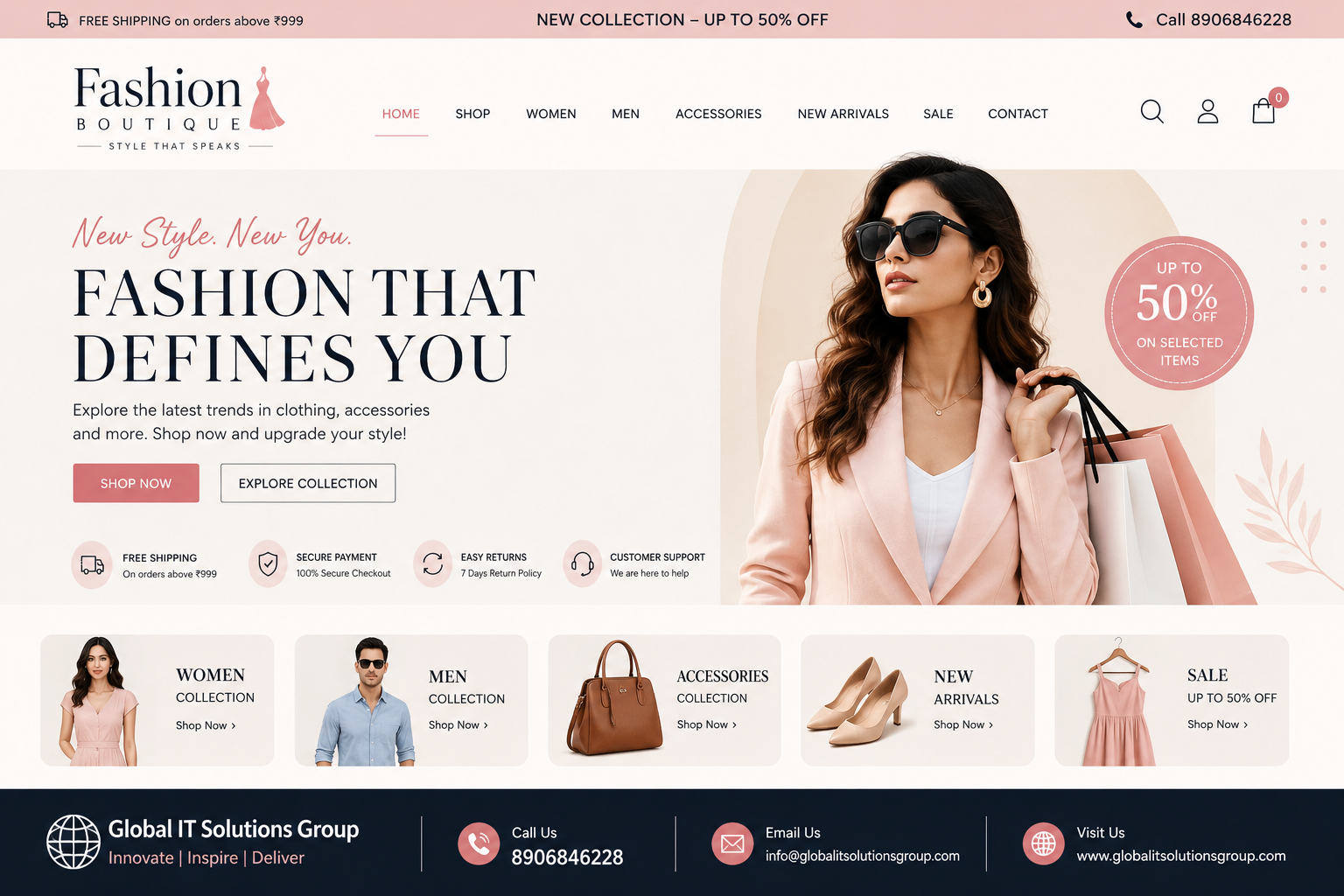
1. Attractive Homepage Design
Your homepage should instantly grab attention with:
- Fashion banners
- Featured collections
- Trending products
- Seasonal offers
- New arrivals
- Call-to-action buttons
The homepage should reflect your boutique’s style and personality.
2. Mobile Responsive Design
Most online fashion shoppers use mobile devices. A responsive website automatically adjusts to different screen sizes and improves user experience.
Benefits include:
- Better Google rankings
- Higher conversions
- Faster browsing
- Improved customer engagement
3. Product Categories and Filters
Organized categories make shopping easier.
Examples:
- Men’s Fashion
- Women’s Clothing
- Kids Wear
- Ethnic Wear
- Accessories
- Footwear
Advanced filters such as size, color, price, fabric, and brand help customers quickly find products.
4. High-Quality Product Images
Fashion products rely heavily on visuals. Use:
- HD product photos
- Multiple angles
- Zoom functionality
- Lifestyle images
- Fashion model photography
Professional product photography significantly improves conversions.
5. Product Descriptions
Clear and engaging product descriptions help customers make buying decisions.
Include:
- Fabric details
- Sizes available
- Washing instructions
- Color information
- Styling suggestions
SEO-friendly descriptions also improve search engine rankings.
6. Shopping Cart and Secure Checkout
A simple checkout process reduces cart abandonment.
Features should include:
- Guest checkout
- Multiple payment methods
- Coupon codes
- Shipping options
- Secure payment gateway
- Order summary
7. Wishlist Feature
Wishlist functionality allows users to save favorite products for future purchases.
Benefits:
- Better user engagement
- Increased return visits
- Higher sales opportunities
8. Customer Reviews and Ratings
Reviews build trust and influence purchasing decisions.
Positive reviews improve:
- Customer confidence
- SEO rankings
- Product credibility
9. Inventory Management
Real-time stock updates prevent overselling and improve customer satisfaction.
Inventory management features include:
- Stock alerts
- Product availability
- Automatic updates
- Low stock notifications
10. Social Media Integration
Fashion brands perform exceptionally well on social media platforms.
Integrate your ecommerce website with:
Social sharing boosts visibility and drives traffic.
Importance of SEO for Fashion Boutique Ecommerce Websites
Search Engine Optimization (SEO) helps your website rank higher on Google and attract organic traffic.
Benefits of SEO
- More website visitors
- Better brand visibility
- Increased sales
- Lower advertising costs
- Long-term online growth
SEO Tips for Fashion Boutique Websites
1. Use Fashion Keywords
Include relevant keywords naturally throughout your website.
Examples:
- Fashion boutique ecommerce website
- Online clothing store design
- Boutique website development
- Fashion ecommerce solutions
- Designer clothing website
2. Optimize Product Pages
Each product page should have:
- Unique title
- Meta description
- SEO-friendly URL
- Optimized images
- Relevant keywords
3. Improve Website Speed
Fast-loading websites rank better on Google and provide a better user experience.
Tips:
- Compress images
- Use caching
- Optimize code
- Choose quality hosting
4. Create Fashion Blog Content
Fashion blogs help attract traffic and improve SEO.
Popular blog ideas:
- Latest fashion trends
- Styling tips
- Seasonal collections
- Fashion guides
- Outfit inspiration
5. Use Schema Markup
Schema helps search engines understand your content better.
Useful schema types:
- Product schema
- Review schema
- FAQ schema
- Breadcrumb schema
Best Design Trends for Fashion Ecommerce Websites
Fashion websites should look modern and stylish.
1. Minimalist Design
Clean layouts improve focus on products.
Benefits:
- Better readability
- Elegant appearance
- Faster loading speed
2. Fullscreen Banners
Large banners create visual impact and showcase collections effectively.
3. Video Integration
Fashion videos improve engagement and help customers understand products better.
Examples:
- Fashion runway videos
- Product styling videos
- Behind-the-scenes clips
4. AI-Based Recommendations
AI recommends products based on user behavior and purchase history.
Benefits:
- Higher sales
- Personalized shopping experience
- Better customer satisfaction
5. Dark Mode Design
Modern websites increasingly offer dark mode for better aesthetics and reduced eye strain.
Ecommerce Platforms for Fashion Boutique Websites
Choosing the right platform is important.
1. Shopify
Best for:
- Easy setup
- Fast performance
- Secure hosting
Features:
- Mobile responsive themes
- Payment gateway integration
- Fashion-focused templates
2. WooCommerce
Ideal for WordPress users.
Benefits:
- Flexible customization
- SEO-friendly
- Cost-effective
3. Magento
Suitable for large fashion brands.
Features:
- Advanced functionality
- Scalability
- Multi-store management
4. OpenCart
A lightweight ecommerce platform for small and medium boutiques.
Payment Gateway Integration
Secure online payments are essential.
Popular payment gateways include:
- Razorpay
- PayPal
- Stripe
- Paytm
- PhonePe
Important features:
- SSL security
- Fast processing
- Multiple payment options
Importance of Mobile Shopping
Mobile commerce continues to grow rapidly.
Your website should provide:
- Fast mobile loading
- Easy navigation
- Touch-friendly buttons
- Smooth checkout process
Google also prioritizes mobile-friendly websites in search rankings.
Security Features for Ecommerce Websites
Online shoppers need confidence that their data is safe.
Important security measures:
- SSL certificate
- Secure payment gateway
- Strong passwords
- Regular updates
- Malware protection
Digital Marketing Strategies for Fashion Boutique Websites
A beautiful website alone is not enough. Marketing drives traffic and sales.
1. Social Media Marketing
Fashion businesses thrive on visual platforms.
Focus on:
- Instagram reels
- Facebook ads
- Pinterest marketing
- Influencer collaborations
2. Email Marketing
Email campaigns help retain customers.
Send:
- Product launches
- Discount offers
- Fashion newsletters
- Abandoned cart reminders
3. Google Ads
Paid advertising can generate targeted traffic quickly.
Popular campaigns:
- Shopping ads
- Search ads
- Remarketing campaigns
4. Influencer Marketing
Fashion influencers help build trust and reach wider audiences.
User Experience in Fashion Ecommerce Design
User experience directly affects conversions.
Key UX elements:
- Easy navigation
- Fast loading
- Clear menus
- Attractive visuals
- Simple checkout
A confusing website causes visitors to leave quickly.
Common Mistakes to Avoid
1. Slow Website Speed
Slow websites reduce sales and SEO rankings.
2. Poor Product Images
Low-quality photos damage brand credibility.
3. Complicated Checkout
Too many checkout steps increase cart abandonment.
4. Lack of SEO
Without SEO, customers may never discover your website.
5. Ignoring Mobile Users
Mobile optimization is no longer optional.
How Fashion Boutique Websites Increase Sales
A professionally designed ecommerce website helps:
- Improve customer trust
- Showcase products effectively
- Offer seamless shopping
- Encourage repeat purchases
- Increase brand recognition
Features like upselling, cross-selling, and personalized recommendations also boost revenue.
Why Professional Website Design Matters
DIY websites may appear unprofessional and fail to convert visitors.
Professional web designers ensure:
- Attractive layouts
- SEO optimization
- Better security
- Faster performance
- Mobile responsiveness
A premium design creates a strong first impression.
Future of Fashion Ecommerce Websites
Fashion ecommerce continues evolving with technology.
Future trends include:
- AI shopping assistants
- Virtual fitting rooms
- Augmented reality
- Voice search
- Personalized shopping experiences
Fashion brands adopting these technologies gain a competitive advantage.
Tips to Choose the Right Web Design Company
When selecting a website design company, consider:
- Portfolio quality
- Ecommerce experience
- SEO expertise
- Mobile design capability
- Support services
- Client reviews
Choose a company that understands fashion branding and ecommerce functionality.
Conclusion
Fashion boutique ecommerce website design plays a critical role in modern fashion business success. A visually attractive, mobile-friendly, SEO-optimized, and user-focused website helps fashion brands attract customers, improve engagement, and increase online sales.
From beautiful product displays to secure payment gateways and digital marketing integration, every aspect of your ecommerce website contributes to customer satisfaction and business growth.
Whether you are starting a new online fashion boutique or upgrading an existing store, investing in professional ecommerce website design is one of the smartest business decisions you can make.
A well-designed fashion ecommerce website not only strengthens your brand identity but also creates long-term opportunities for growth in the competitive online fashion market.
FAQs About Fashion Boutique Ecommerce Website Design
1. Why does a fashion boutique need an ecommerce website?
An ecommerce website helps fashion boutiques reach more customers, increase sales, and establish a strong online presence.
2. Which platform is best for fashion ecommerce websites?
Shopify, WooCommerce, and Magento are popular choices depending on business size and requirements.
3. How important is mobile responsiveness?
Very important. Most users shop through mobile devices, and Google prioritizes mobile-friendly websites.
4. What features should a fashion boutique website include?
Important features include product galleries, secure checkout, filters, wishlist, reviews, and SEO optimization.
5. How can SEO help a fashion ecommerce website?
SEO improves Google rankings, increases traffic, and helps attract potential customers organically.
6. How much does a fashion boutique ecommerce website cost?
The cost depends on design complexity, features, platform, and customization requirements.
7. What payment gateways should be integrated?
Popular gateways include Razorpay, PayPal, Stripe, Paytm, and PhonePe.
8. Why are product images important?
High-quality images improve trust, showcase products effectively, and increase conversions.
9. How can social media help fashion ecommerce businesses?
Social media platforms drive traffic, increase brand visibility, and boost customer engagement.
10. What is the future of fashion ecommerce?
Future trends include AI personalization, AR fitting rooms, voice search, and advanced customer experiences.
Call : +91 8906846228
Our Services
Website & Mobile App Development
Mobile App Development
Digital Marketing
Search Engine Optimization (SEO)
Software Development
IT Solutions
Recent Post