Auto Repair Shop Website Design: Complete Guide to Build a High-Converting Garage Website
In today’s digital world, customers search online before choosing an auto repair shop, mechanic, car service center, or vehicle maintenance company. A professional auto repair shop website helps your business attract local customers, build trust, increase service bookings, and improve Google rankings.
Whether you run a car garage, automobile workshop, tire repair center, oil change service, denting and painting shop, or full-service automotive repair business, your website acts as your online showroom. A modern and SEO-friendly auto repair website can generate consistent leads and help your business grow faster.
This comprehensive guide explains everything about auto repair shop website design, including essential features, SEO optimization, lead generation strategies, mobile responsiveness, and best practices to create a successful automotive website.
Why Auto Repair Shops Need a Professional Website
Most customers now search online using phrases like:
- Car repair shop near me
- Best mechanic near me
- Auto service center
- Oil change service
- Brake repair shop
- Car AC repair service
- Tire replacement center
Without a professional website, auto repair businesses lose valuable customers to competitors.
A well-designed auto repair website helps:
- Generate more local leads
- Build trust and credibility
- Increase appointment bookings
- Showcase automotive services
- Improve local SEO rankings
- Display customer reviews
- Provide contact information
- Promote special offers
- Grow brand visibility
- Increase long-term revenue
Your website works as a 24/7 marketing tool for your garage business.
Essential Features of Auto Repair Shop Website Design
A successful automotive website should combine professional design, user-friendly navigation, SEO optimization, and fast performance.
Professional Homepage Design
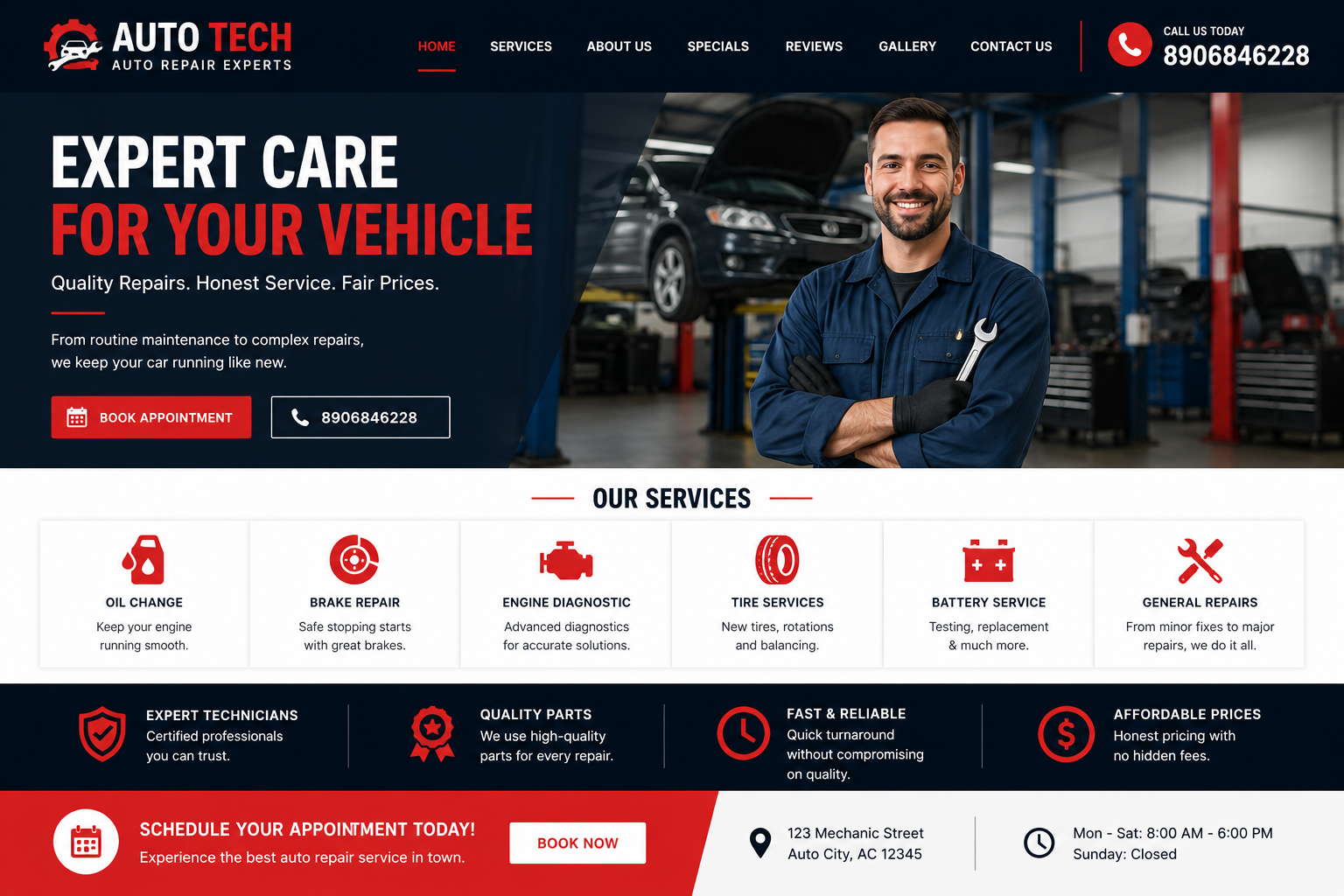
The homepage is the first thing visitors see. It should immediately explain your automotive services and encourage customers to contact you.
Your homepage should include:
- Strong headline
- Automotive service overview
- Call-to-action buttons
- Appointment booking section
- Emergency repair information
- Customer testimonials
- Service highlights
- Contact details
- Garage photos
- Business hours
Example headline:
“Trusted Auto Repair & Car Service Center for All Vehicle Types”
A clean and professional homepage increases customer trust.
Mobile-Friendly Auto Repair Website Design
Most customers search for repair shops using smartphones while traveling or during emergencies.
A mobile-responsive website ensures:
- Better user experience
- Faster browsing
- Easy appointment booking
- Improved Google rankings
- Higher conversion rates
Your automotive website should work perfectly on:
- Smartphones
- Tablets
- Laptops
- Desktop computers
Mobile-first design is now essential for local businesses.
Fast Loading Speed
Website speed affects both customer experience and SEO rankings.
Slow automotive websites can reduce inquiries and increase bounce rates.
Ways to improve speed:
- Compressed images
- Fast hosting
- Optimized coding
- Browser caching
- CDN integration
- Lightweight themes
Fast websites improve customer satisfaction and online visibility.
SEO Optimization for Auto Repair Shop Websites
SEO helps your automotive website rank higher on Google and attract local customers.
A properly optimized website can generate consistent organic traffic without depending only on paid advertising.
Important Automotive SEO Keywords
Examples include:
- Auto repair shop website design
- Car service center website
- Mechanic website design
- Garage website development
- Automotive repair website
- Vehicle repair services
- Tire repair shop
- Car AC repair
- Brake repair service
- Oil change center
Use keywords naturally throughout:
- Titles
- Meta descriptions
- Headings
- URLs
- Service pages
- Blog posts
- Image alt tags
Local SEO for Auto Repair Shops
Local SEO is extremely important because most customers search for nearby services.
Examples:
- Auto repair shop in Kolkata
- Car mechanic in Delhi
- Garage service in Mumbai
- Car servicing near me
Local SEO strategies include:
- Google Business Profile optimization
- Customer reviews
- Local citations
- City-specific pages
- Location-based keywords
- Google Maps integration
Strong local SEO helps auto repair businesses dominate nearby searches.
Online Appointment Booking System
An appointment booking feature increases convenience and conversions.
Customers should easily schedule:
- Car servicing
- Oil changes
- Tire replacement
- Brake inspection
- Engine diagnostics
- AC repair
- Vehicle maintenance
Online booking reduces phone calls and improves operational efficiency.
Automotive Service Pages
Create dedicated pages for every automotive service.
Examples include:
- Engine repair
- Brake repair
- Suspension repair
- Wheel alignment
- Battery replacement
- Transmission repair
- Car detailing
- Tire services
- Denting and painting
- Car washing
Dedicated pages improve SEO and help customers find relevant services quickly.
Importance of Trust and Credibility
Vehicle owners want reliable mechanics and trustworthy service providers.
Your website should include:
- Customer testimonials
- Google reviews
- Certifications
- Mechanic experience
- Before-and-after photos
- Warranty information
- Years of experience
- Service guarantees
Trust signals increase customer confidence.
Best Color Schemes for Automotive Websites
Popular automotive website colors include:
- Red for energy and action
- Blue for trust and professionalism
- Black for premium appearance
- Gray for modern design
- White for clean layouts
Consistent branding improves business recognition.
Auto Repair Shop Website Navigation
Simple navigation helps users quickly find services and contact information.
Important menu sections include:
- Home
- About Us
- Services
- Appointment Booking
- Gallery
- Testimonials
- Blog
- Contact Us
Easy navigation improves user experience and conversions.
Contact Information Visibility
Customers should quickly find:
- Phone number
- Garage address
- Email address
- Business hours
- Emergency service details
Add click-to-call buttons for mobile users.
Easy contact access increases inquiries and bookings.
Image Gallery and Workshop Photos
High-quality images improve credibility.
Show photos of:
- Workshop interiors
- Repair equipment
- Mechanics at work
- Customer vehicles
- Service bays
- Tire replacement
- Vehicle diagnostics
Real images create trust and professionalism.
Automotive Blog Content for SEO
Blogging helps automotive businesses rank for additional keywords.
Useful blog topics include:
- Car maintenance tips
- Signs your brakes need repair
- When to replace tires
- How to improve fuel efficiency
- Engine overheating causes
- Car AC maintenance tips
- Battery care guide
- Seasonal vehicle maintenance
Blogs improve organic traffic and establish expertise.
Emergency Car Repair Website Features
Many customers search for urgent automotive services.
Highlight emergency services such as:
- 24/7 roadside assistance
- Emergency towing
- Battery jumpstart
- Flat tire repair
- Emergency diagnostics
Emergency-focused content can generate immediate leads.
Google Maps Integration
Google Maps helps customers locate your garage easily.
Benefits include:
- Better local SEO
- Improved navigation
- Higher trust
- More local traffic
Map integration is essential for local automotive businesses.
Importance of Customer Reviews
Online reviews strongly influence automotive service decisions.
Display reviews from:
- Yelp
- Local directories
Positive reviews improve credibility and SEO performance.
Auto Repair Shop Website Design Trends
Modern automotive websites use advanced design trends such as:
- Minimal layouts
- Video backgrounds
- Interactive service sections
- Online chat support
- Dark mode
- Animated transitions
- AI chatbots
- Mobile-first interfaces
Modern design improves engagement and customer perception.
Call-to-Action Buttons
Strong CTA buttons increase conversions.
Examples include:
- Book Appointment
- Call Now
- Get Free Estimate
- Schedule Service
- Request Inspection
- Contact Mechanic
CTAs should be visible throughout the website.
Social Media Integration
Social media helps automotive businesses increase visibility and customer engagement.
Useful platforms include:
- YouTube
Social integration helps promote:
- Repair tips
- Customer reviews
- Special offers
- Garage updates
- Service promotions
Security Features for Automotive Websites
Your website should protect customer information.
Essential security features include:
- SSL certificate
- Secure hosting
- Spam protection
- Backup systems
- Firewall security
Security improves trust and website reliability.
Why Custom Auto Repair Website Design is Better
Custom-designed websites offer:
- Unique branding
- Better performance
- SEO advantages
- Improved speed
- Scalability
- Better user experience
Custom automotive websites stand out from competitors using generic templates.
Importance of Conversion Optimization
Your website should convert visitors into paying customers.
Conversion optimization tips include:
- Simple forms
- Strong headlines
- Fast loading speed
- Clear CTAs
- Trust indicators
- Easy navigation
- Mobile optimization
- Live chat integration
Higher conversions increase ROI from your website traffic.
Auto Repair Website Mistakes to Avoid
Avoid these common problems:
Outdated Design
Old websites reduce trust and professionalism.
Poor Mobile Experience
Mobile users expect fast and responsive websites.
Missing Contact Information
Difficult-to-find contact details reduce inquiries.
Slow Website Speed
Slow websites frustrate users and hurt SEO.
Weak SEO
Without SEO, customers cannot find your garage online.
No Online Booking
Customers prefer convenient digital scheduling.
Low-Quality Images
Poor visuals reduce trust and credibility.
Best Pages for Auto Repair Shop Websites
Important website pages include:
- Home
- About Us
- Services
- Appointment Booking
- Testimonials
- Gallery
- Blog
- FAQ
- Contact Us
- Privacy Policy
Well-structured pages improve SEO and user experience.
Auto Repair Website Lead Generation Strategies
A professional website can generate leads through:
- Google search traffic
- Local SEO
- Google Ads
- Facebook marketing
- Instagram promotions
- Content marketing
- Referral traffic
- Email campaigns
Lead generation depends heavily on website quality and optimization.
Importance of Automotive Branding
Strong branding helps auto repair businesses appear more professional.
Branding elements include:
- Professional logo
- Consistent colors
- Typography
- Vehicle-themed graphics
- Brand messaging
Strong branding improves recognition and customer loyalty.
AI and Automation in Automotive Websites
Modern automotive websites increasingly use AI features such as:
- AI chatbots
- Automated appointment reminders
- Vehicle service tracking
- Customer management systems
- Smart scheduling tools
Automation improves efficiency and customer experience.
Choosing the Right Auto Repair Website Design Company
Before hiring a web design company, check:
- Automotive industry experience
- SEO knowledge
- Mobile design expertise
- Portfolio quality
- Customer reviews
- Website speed optimization
- Technical support
A professional agency helps create a high-performing automotive website.
Importance of Content Management Systems
CMS platforms help auto repair shops manage content easily.
Popular CMS options include:
- WordPress
- Joomla
- Drupal
WordPress is especially popular because it offers:
- Easy updates
- SEO plugins
- Appointment booking plugins
- Mobile responsiveness
- Scalability
A good CMS simplifies website management.
Future of Auto Repair Shop Websites
The automotive industry continues evolving digitally.
Future website trends include:
- AI diagnostics integration
- Voice search optimization
- Online vehicle tracking
- Video consultations
- Automated customer service
- Predictive maintenance tools
Modern automotive businesses must adapt to remain competitive.
Conclusion
A professional auto repair shop website is essential for attracting customers, increasing bookings, improving local SEO, and building trust in today’s competitive automotive industry. A successful automotive website combines responsive design, fast speed, strong SEO, online booking functionality, and excellent user experience.
Whether you run a local garage, vehicle repair center, tire shop, or full-service automobile workshop, investing in high-quality website design can significantly improve your online visibility and business growth.
A modern and optimized auto repair website is not just a marketing tool — it is a long-term investment in the future success of your automotive business.
FAQs – Auto Repair Shop Website Design
1. Why does an auto repair shop need a website?
A website helps attract local customers, increase bookings, improve credibility, and grow online visibility.
2. What features should an automotive website include?
Important features include appointment booking, service pages, mobile responsiveness, SEO optimization, reviews, and contact forms.
3. Why is local SEO important for auto repair shops?
Local SEO helps your garage appear in nearby Google searches and attract local customers.
4. Should automotive websites be mobile-friendly?
Yes. Most customers search for repair services using smartphones.
5. What platform is best for auto repair websites?
WordPress is widely preferred because it is flexible, SEO-friendly, and easy to manage.
6. How can automotive blogs help SEO?
Blogs improve search rankings, increase traffic, and establish industry authority.
7. Why are customer reviews important?
Positive reviews build trust and influence customer decisions.
8. What is the ideal loading speed for automotive websites?
Ideally under 3 seconds for better user experience and SEO performance.
9. Can auto repair websites accept online bookings?
Yes. Modern automotive websites can integrate online scheduling systems.
10. How does a professional website help increase garage revenue?
A professional website attracts more customers, improves credibility, increases conversions, and supports digital marketing campaigns.
Call : +91 8906846228
Our Services
Website Design & Development
Mobile App Development
Digital Marketing
Search Engine Optimization (SEO)
Software Development
IT Solutions
Recent Post