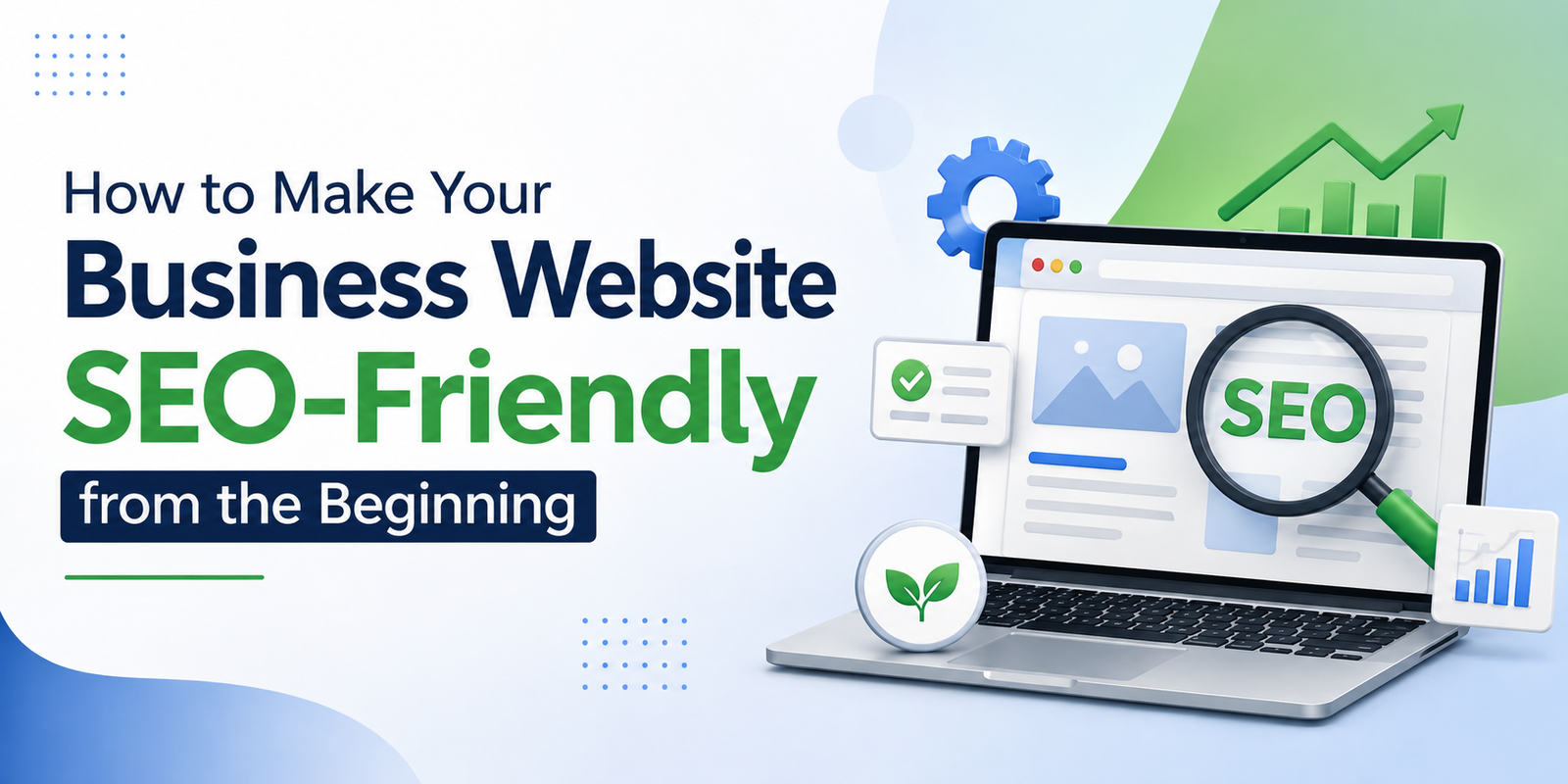
How to Make Your Business Website SEO-Friendly from the Beginning
A business website is one of the most important digital assets a company can have. It gives potential customers a place to learn about products and services, understand the business, make enquiries and take the next step toward becoming a customer. However, simply creating a website does not guarantee that people will find it through Google and other search engines.
Search engine optimization, commonly known as SEO, should be considered from the beginning of the website planning and development process. An SEO-friendly website has a clear structure, useful content, good usability, appropriate technical foundations and pages that help both visitors and search engines understand the business.
At Global IT Solutions Group, we believe SEO should not be treated as something that is added after a website has already been completed. Building a search-friendly foundation from the beginning can make future optimization easier and can provide a better experience for website visitors.
What Is an SEO-Friendly Website?
An SEO-friendly website is a website designed and structured in a way that makes it easier for search engines to discover, understand and index its content while also providing a useful experience for visitors.
SEO involves much more than adding keywords to website pages. Search engines consider many different signals when determining which pages are useful for particular searches.
An SEO-friendly website generally includes:
- Clear website navigation
- Useful and original content
- Descriptive page titles
- Appropriate headings
- Search-friendly URLs
- Mobile-friendly design
- Fast and efficient pages
- Optimized images
- Internal links
- Proper technical configuration
- Accessible content
- Secure HTTPS implementation
The goal should always be to create a website primarily for people while ensuring that search engines can understand its content.
1. Plan the Website Structure Before Development
One of the first steps in creating an SEO-friendly website is planning its structure.
Before development begins, decide which pages the website actually needs. A typical business website might include:
- Home
- About Us
- Services
- Individual service pages
- Products
- Portfolio
- Blog
- FAQs
- Contact
The navigation should be logical and easy to understand.
For example, if a company provides website design, ecommerce development and digital marketing, each major service can have its own dedicated page rather than putting everything into one large page.
A clear structure helps visitors find information and also gives search engines a better understanding of the relationship between different pages.
2. Research What Your Customers Search For
Keyword research can help you understand how potential customers describe the products or services they need.
Instead of selecting keywords only because they have high search volume, consider the actual intention behind a search.
For example, someone searching for:
“what is responsive web design”
is probably looking for information.
Someone searching for:
“website design company”
may be researching service providers.
Someone searching for:
“ecommerce website development cost”
may be comparing solutions and preparing to make a purchasing decision.
Understanding search intent allows you to create different types of content for different stages of the customer journey.
3. Create Helpful, Original Content
Content is an important part of SEO, but producing large amounts of text should not be the primary objective.
A business website should answer the questions customers actually have.
Service pages can explain:
- What the service includes
- Who the service is suitable for
- How the process works
- Important features
- Expected deliverables
- Frequently asked questions
- How customers can get started
Blog articles can provide educational information about topics related to the business.
Avoid copying content from other websites or producing multiple pages with almost identical text simply by changing a city or keyword. Each important page should have a clear purpose and provide information that is genuinely useful.
4. Write Descriptive Page Titles
The page title helps users and search engines understand what a page is about.
A good title should accurately describe the page and naturally include the primary topic where appropriate.
For example:
Website Design Services | Global IT Solutions Group
is more informative than:
Home | Page 1
Avoid stuffing many variations of the same keyword into the title. A concise, descriptive title is generally more useful.
Each important page should have its own relevant title rather than using the same title across the entire website.
5. Use Proper Heading Structure
Headings organize content into understandable sections.
A page should normally have a clear main heading and supporting subheadings.
For example:
H1: Professional Website Design Services
H2: Business Website Design
H2: Ecommerce Website Development
H2: Responsive Website Design
H2: Website Redesign Services
H2: Frequently Asked Questions
Headings should describe the content that follows them. They should not simply be used to insert keywords repeatedly.
Good heading structure also makes long pages easier for visitors to scan.
6. Keep URLs Simple and Meaningful
Website URLs should be easy to understand.
For example:
/website-design/
is clearer than a URL containing unnecessary numbers, parameters or unrelated words.
For individual services, descriptive URLs can make the website structure easier to understand.
Keep URLs relatively short, use meaningful words and avoid unnecessary changes once a page has been indexed.
If an existing URL must be changed, appropriate redirects should be considered so visitors and search engines can reach the new location.
7. Make the Website Mobile-Friendly
People access websites from smartphones, tablets, laptops and desktop computers.
A website that looks good on a desktop but is difficult to use on a mobile phone can create a poor experience.
Responsive design allows website layouts to adapt to different screen sizes.
Check that:
- Text is readable
- Buttons are easy to tap
- Navigation works properly
- Images fit the screen
- Forms are usable
- Important information is easy to find
- Users do not need to zoom horizontally
Mobile usability should be considered during the original design rather than fixed after the website is completed.
8. Improve Website Loading Performance
Website speed can affect user experience. Visitors may leave a page if it takes too long to become usable.
Common ways to improve performance include:
- Compressing images
- Using appropriately sized images
- Reducing unnecessary scripts
- Minifying CSS and JavaScript where appropriate
- Using browser caching
- Choosing suitable hosting
- Reducing unnecessary third-party resources
- Optimizing database queries for dynamic websites
Performance should be tested on both desktop and mobile devices.
Google also provides Core Web Vitals as a set of measurements related to loading performance, interactivity and visual stability.
9. Optimize Images
Images can improve the appearance and usefulness of a website, but large unoptimized images can slow pages down.
Before uploading an image:
- Resize it to an appropriate display size.
- Compress it without unnecessarily reducing quality.
- Use an appropriate modern image format where suitable.
- Give important images descriptive filenames.
- Add useful alternative text when appropriate.
Alternative text should describe the image for users who cannot see it. It should not be used as a place to insert a long list of keywords.
10. Build a Strong Internal Linking System
Internal links connect pages within the same website.
For example, a blog article about ecommerce website development can naturally link to the company’s ecommerce development service page.
Internal links can help visitors discover related information and help search engines understand the relationship between pages.
Use descriptive anchor text that tells users what they can expect after clicking.
Avoid creating large blocks of repetitive keyword links simply for SEO purposes.
11. Create Useful Service Pages
Businesses often make the mistake of creating one page that lists every service.
If several services are important to the business, dedicated pages can provide a better experience.
For example, Global IT Solutions Group can have separate pages for:
- Website Design
- Ecommerce Development
- Mobile App Development
- SEO Services
- Digital Marketing
- Website Maintenance
Each page should explain that specific service in sufficient detail.
A strong service page should answer the customer’s basic questions before they need to contact the company.
12. Add Local Business Information When Relevant
Businesses serving specific geographic areas should make their service areas clear where appropriate.
Important business information can include:
- Business name
- Contact information
- Business location
- Service areas
- Opening hours
- Google Business Profile
- Relevant local information
However, local SEO should be based on genuine business relevance. Creating dozens of nearly identical pages simply by changing location names can provide little value to users.
If a business genuinely serves different areas, each location page should provide useful information specific to that location.
13. Use HTTPS and Maintain Website Security
Website security is important for both businesses and visitors.
A website should use HTTPS with a valid SSL/TLS certificate.
Businesses should also keep website software, plugins, frameworks and server components updated where applicable.
Regular backups, secure administrator accounts and appropriate access controls can further reduce operational risks.
Security is not just an SEO consideration. It is part of responsible website management.
14. Connect the Website With Google Search Console
After launching a website, it is useful to monitor how search engines are discovering and displaying its pages.
Google Search Console can provide information about:
- Search queries
- Impressions
- Clicks
- Search positions
- Indexing
- Search appearance
- Technical issues
This information can help identify pages that are performing well and pages that may require improvement.
SEO should be treated as an ongoing process rather than a one-time activity completed when the website launches.
15. Create a Blog With a Real Purpose
A business blog can help answer customer questions and demonstrate knowledge in the company’s area of expertise.
Good blog topics should be connected to the products or services offered by the business.
For a website design company, useful topics might include:
- How to choose a website design company
- Business website features
- Ecommerce website planning
- Website redesign checklist
- Responsive website design
- Website security
- SEO-friendly website development
- Website maintenance
Avoid publishing large numbers of low-quality articles just to increase the number of indexed pages.
A smaller collection of genuinely useful articles can be more valuable than hundreds of repetitive pages.
SEO-Friendly Website Development With Global IT Solutions Group
Creating an SEO-friendly website from the beginning requires cooperation between design, development, content and marketing.
At Global IT Solutions Group, we focus on building websites that combine professional design with practical functionality and a search-friendly foundation.
Our website development services can include business websites, corporate websites, ecommerce websites, dynamic websites, responsive websites, customized web solutions and website redesign.
Whether you are starting a new business website or upgrading an existing one, planning SEO during the development stage can help create a stronger foundation for future digital marketing.
Conclusion
SEO-friendly website development begins long before a page appears in Google search results. It starts with understanding the audience, planning a logical website structure, creating useful content and building a technically sound website.
Mobile usability, page performance, descriptive titles, clear headings, meaningful URLs, internal links, optimized images and secure website technology all contribute to creating a better website experience.
Most importantly, SEO should not be treated as a collection of tricks. A successful business website should first help real people find information, understand a company’s services and take meaningful action.
By combining thoughtful website design, useful content, technical best practices and continuous improvement, businesses can create an online presence that is better prepared for long-term growth.
Global IT Solutions Group provides professional website design, website development, ecommerce development, SEO and digital marketing solutions for businesses looking to build a stronger presence online.
Call : +91 8906846228
Our Services
Website & Mobile App Development
Mobile App Development
Digital Marketing
Search Engine Optimization (SEO)
Software Development
IT Solutions
Recent Post