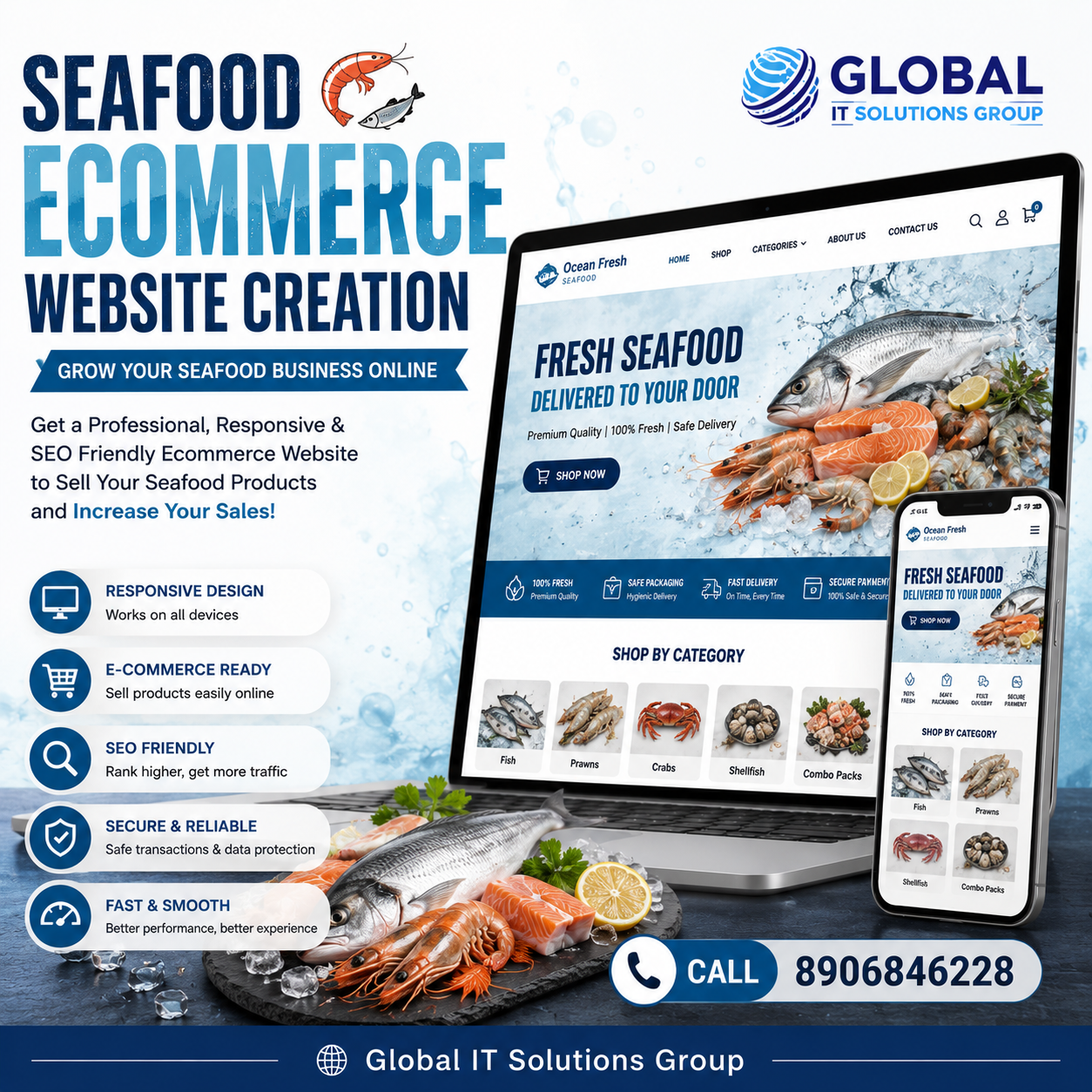
Seafood eCommerce Website Creation: A Complete Guide to Building a Successful Online Seafood Business
Introduction
The seafood industry is one of the most important sectors in the global food market. From fresh fish and prawns to crabs, lobsters, oysters, and premium seafood products, consumers increasingly seek convenient ways to purchase high-quality seafood without visiting traditional fish markets. With the rapid growth of online shopping and home delivery services, seafood businesses now have an excellent opportunity to reach customers through professionally designed eCommerce websites.
A seafood eCommerce website serves as a digital marketplace where customers can browse products, compare prices, place orders, and schedule deliveries from the comfort of their homes. Whether you operate a local seafood shop, a fish distribution company, a seafood processing business, or a premium seafood brand, a modern website can help expand your customer base, improve sales, and strengthen your reputation.
In today’s digital-first environment, consumers expect convenience, transparency, and easy access to information. A well-designed seafood website not only showcases products but also builds trust by providing details about freshness, sourcing, packaging, delivery processes, and food safety standards.
This comprehensive guide explores the importance of seafood eCommerce website creation, essential website features, design strategies, search engine optimization techniques, and how a professional online platform can help your seafood business grow sustainably.
Why Seafood Businesses Need an eCommerce Website
Consumer purchasing habits have changed dramatically in recent years. More people now prefer ordering food products online due to convenience, time savings, and doorstep delivery services.
Customers frequently search online for:
- Fresh seafood delivery
- Fish online shopping
- Prawns delivery service
- Buy fresh fish online
- Seafood store near me
- Premium seafood supplier
- Fresh crab delivery
- Frozen seafood products
Without a website, seafood businesses may miss valuable opportunities to connect with these customers.
An eCommerce website allows your seafood business to remain accessible twenty-four hours a day, enabling customers to browse products and place orders whenever they choose.
Benefits of a Seafood eCommerce Website
Expanded Market Reach
A physical seafood store is limited by location. A website removes geographical barriers and allows businesses to reach a much wider audience.
Benefits include:
- Increased customer base
- More online orders
- Better brand awareness
- Access to new markets
A professional website helps seafood businesses compete effectively in a growing digital marketplace.
Improved Customer Convenience
Modern customers value convenience.
An online seafood store enables customers to:
- Browse products
- Compare options
- Place orders quickly
- Schedule deliveries
- Make secure payments
This streamlined experience encourages repeat purchases.
24/7 Sales Platform
Unlike physical stores, a website never closes.
Customers can:
- Explore products anytime
- Place orders outside business hours
- Learn about seafood varieties
- Access nutritional information
Continuous accessibility increases sales opportunities.
Stronger Brand Presence
A professionally designed website enhances credibility and trust.
It demonstrates:
- Professionalism
- Product quality
- Food safety commitment
- Customer-focused service
A strong online presence helps differentiate your business from competitors.
Understanding Modern Seafood Consumers
Today’s seafood buyers are more informed than ever before.
Before making a purchase, they often want information about:
- Freshness
- Source of seafood
- Sustainability practices
- Packaging methods
- Delivery timelines
- Pricing
- Storage recommendations
A website provides this information in a clear and organized format.
Essential Features of a Seafood eCommerce Website
Attractive Homepage
The homepage is often the first interaction customers have with your brand.
An effective homepage should include:
- High-quality seafood images
- Featured products
- Promotional offers
- Customer testimonials
- Delivery information
- Clear navigation
The homepage should immediately communicate quality, freshness, and reliability.
Product Catalog
A well-organized catalog helps customers find products easily.
Categories may include:
Fresh Fish
Examples include:
- Salmon
- Tuna
- Rohu
- Hilsa
- Catla
Shellfish
Products such as:
- Prawns
- Shrimp
- Lobster
- Crab
Frozen Seafood
Long-lasting options for customers seeking convenience.
Premium Seafood
Luxury products including imported fish and specialty seafood.
Organized categories improve user experience and sales conversions.
Detailed Product Pages
Each product page should provide comprehensive information.
Include:
- Product name
- Images
- Weight options
- Pricing
- Nutritional details
- Freshness information
- Storage instructions
- Delivery availability
Detailed descriptions help customers make confident purchasing decisions.
Advanced Search and Filters
Customers should be able to quickly locate products.
Useful filters include:
- Product type
- Price range
- Fresh or frozen
- Weight
- Popularity
- Availability
Efficient search functionality improves customer satisfaction.
Online Ordering and Shopping Cart Features
A seafood eCommerce website should provide a seamless purchasing experience.
Features include:
- Shopping cart functionality
- Quantity selection
- Delivery scheduling
- Secure checkout
- Order confirmation
A simplified process reduces cart abandonment and increases sales.
Secure Payment Integration
Customers expect secure payment options.
Common methods include:
- Credit cards
- Debit cards
- UPI payments
- Net banking
- Mobile wallets
- Cash on delivery
Multiple payment choices improve customer convenience.
Mobile-Friendly Website Design
A large percentage of online shoppers use mobile devices.
A responsive website ensures:
- Easy browsing
- Faster loading
- Better navigation
- Improved user experience
Mobile optimization is also an important ranking factor for search engines.
Website Design Best Practices for Seafood Businesses
High-Quality Product Photography
Seafood products must look fresh and appealing.
Professional images help showcase:
- Product quality
- Freshness
- Packaging
- Portion sizes
Visual presentation strongly influences purchasing decisions.
Clean and Professional Layout
A clutter-free design improves usability.
Important elements include:
- Clear navigation menus
- Readable typography
- Consistent branding
- Simple checkout process
The design should inspire trust and confidence.
Consistent Brand Identity
Maintain consistency across:
- Logo
- Colors
- Fonts
- Product presentation
- Marketing materials
Strong branding improves recognition and customer loyalty.
Search Engine Optimization for Seafood Websites
SEO helps customers discover your business online.
Keyword Optimization
Important keywords include:
- Seafood online
- Fresh fish delivery
- Seafood store
- Buy seafood online
- Seafood delivery service
- Premium seafood supplier
Use keywords naturally throughout website content.
Local SEO
Many seafood businesses serve specific geographic areas.
Optimize for searches such as:
- Seafood delivery in Kolkata
- Fresh fish near me
- Seafood supplier in West Bengal
- Online fish market nearby
Local SEO improves visibility among nearby customers.
Product Page Optimization
Each product page should include:
- Unique titles
- Meta descriptions
- Detailed content
- Image alt tags
Well-optimized pages attract targeted search traffic.
Website Speed Optimization
Fast websites provide better experiences.
Optimization methods include:
- Image compression
- Browser caching
- Reliable hosting
- Efficient coding
Website speed influences both rankings and conversions.
Building Trust Through Transparency
Trust is especially important when selling food products online.
Product Source Information
Customers appreciate knowing where seafood originates.
Share details about:
- Fishing locations
- Aquaculture practices
- Supplier standards
- Sustainability efforts
Transparency builds credibility.
Food Safety Information
Highlight your commitment to safety.
Include information about:
- Hygiene standards
- Packaging methods
- Temperature control
- Quality inspections
Food safety assurances encourage purchases.
Customer Reviews
Display authentic customer feedback.
Positive reviews help demonstrate:
- Product freshness
- Delivery reliability
- Customer satisfaction
Social proof significantly influences buying decisions.
Content Marketing for Seafood Websites
Content marketing improves SEO and customer engagement.
Seafood Buying Guides
Examples include:
- How to choose fresh fish
- Understanding seafood quality
- Seafood storage tips
Educational content positions your business as an authority.
Seafood Recipes
Recipes attract visitors and inspire purchases.
Popular topics include:
- Grilled fish recipes
- Prawn curry ideas
- Healthy seafood meals
- Seafood party dishes
Recipe content often generates substantial organic traffic.
Nutritional Information
Many consumers are health-conscious.
Content can focus on:
- Protein benefits
- Omega-3 fatty acids
- Healthy eating tips
- Seafood nutrition facts
Educational resources build trust and authority.
Delivery Management Features
Reliable delivery is critical for seafood businesses.
Website features may include:
Delivery Scheduling
Customers can choose preferred delivery times.
Real-Time Tracking
Provides visibility throughout the delivery process.
Service Area Verification
Ensures accurate delivery coverage.
Delivery Notifications
Keeps customers informed about order status.
Efficient delivery systems improve customer satisfaction.
Subscription Services for Seafood Businesses
Recurring delivery programs are becoming increasingly popular.
Subscription options may include:
- Weekly seafood boxes
- Monthly seafood selections
- Family meal packages
- Premium seafood memberships
Subscription models provide predictable revenue and customer retention.
Social Media Integration
Social media supports customer engagement and brand awareness.
Popular platforms include:
- YouTube
Benefits include:
- Product promotion
- Customer interaction
- Traffic generation
- Brand building
Visual seafood content performs particularly well on social platforms.
Email Marketing Opportunities
Email marketing remains highly effective.
Campaigns may promote:
- Fresh arrivals
- Seasonal specials
- Discount offers
- New product launches
Regular communication helps maintain customer relationships.
Security Features Every Seafood eCommerce Website Needs
Website security protects customer information and business operations.
Important measures include:
SSL Certificates
Encrypt sensitive data and improve trust.
Secure Payment Gateways
Protect financial transactions.
Malware Protection
Prevent unauthorized access.
Regular Backups
Safeguard business data.
Software Updates
Maintain security and performance.
A secure website reassures customers and supports long-term success.
Analytics and Business Insights
Website analytics help improve decision-making.
Track metrics such as:
- Visitor traffic
- Product popularity
- Conversion rates
- Cart abandonment
- Customer behavior
Data-driven insights support continuous improvement.
Common Mistakes to Avoid
Poor Product Images
Low-quality visuals can reduce customer confidence.
Invest in professional photography.
Complicated Checkout Processes
Long checkout procedures increase abandonment rates.
Keep the process simple and intuitive.
Incomplete Product Information
Customers need detailed descriptions before purchasing.
Provide comprehensive information for every product.
Slow Website Performance
Slow websites negatively affect sales and user experience.
Optimize speed regularly.
Ignoring Mobile Users
A poor mobile experience can lead to lost customers.
Ensure full responsiveness across devices.
Future Trends in Seafood eCommerce Websites
Technology continues to transform online food retail.
Artificial Intelligence
AI can provide personalized product recommendations.
Smart Inventory Systems
Advanced tools help manage stock levels efficiently.
Enhanced Customer Personalization
Tailored product suggestions improve conversions.
Sustainable Seafood Tracking
Customers increasingly value sustainability information.
Advanced Delivery Technologies
Improved logistics systems enhance customer satisfaction.
Businesses that embrace innovation will remain competitive.
How a Professional Seafood Website Increases Revenue
A professionally developed website contributes directly to business growth by:
- Increasing online visibility
- Generating more orders
- Improving customer retention
- Enhancing brand credibility
- Supporting marketing campaigns
- Expanding geographic reach
The website becomes a powerful sales and marketing platform that operates continuously.
Choosing the Right Seafood Website Development Company
Selecting an experienced development partner is important.
Look for expertise in:
- eCommerce development
- Responsive design
- SEO implementation
- Security management
- Performance optimization
- User experience design
A professional development team can create a platform tailored to your business needs.
Conclusion
The seafood industry is rapidly embracing digital transformation as consumers increasingly prefer the convenience of online shopping and home delivery. A professionally designed seafood eCommerce website provides businesses with a powerful platform to showcase products, accept orders, build customer trust, and increase revenue. Modern customers expect detailed product information, secure payments, reliable delivery options, and seamless shopping experiences, all of which can be achieved through an effective website.
From displaying fresh seafood products and managing online orders to improving search engine visibility and supporting digital marketing efforts, a seafood eCommerce website serves as a valuable business asset. Whether you operate a local fish market, a seafood wholesale business, a premium seafood brand, or a nationwide delivery service, investing in professional website creation can deliver substantial long-term benefits.
By focusing on quality content, user-friendly design, mobile responsiveness, search engine optimization, customer trust, and food safety transparency, your seafood website can attract more customers, generate higher sales, and establish a strong reputation in the competitive online marketplace. A well-developed seafood eCommerce website is not merely an online store—it is a strategic growth platform that supports business success in the modern digital economy.
Call : +91 8906846228
Our Services
Website & Mobile App Development
Mobile App Development
Digital Marketing
Search Engine Optimization (SEO)
Software Development
IT Solutions
Recent Post