Toy Store Ecommerce Website Design: Complete Guide to Building a Successful Online Toy Store
The toy industry has experienced massive growth in online shopping over the last few years. Parents, gift buyers, and families now prefer purchasing toys online because it offers convenience, product variety, easy price comparison, and doorstep delivery. Whether you own a local toy shop, educational toy business, baby toy brand, or children’s gift store, having a professional ecommerce website is essential for business growth.
A well-designed toy store ecommerce website helps businesses attract customers, build trust, improve user experience, and increase sales. Modern customers expect fast-loading websites, colorful product displays, secure payment systems, and mobile-friendly shopping experiences.
In this complete guide, you will learn everything about toy store ecommerce website design, including essential features, SEO strategies, mobile optimization, payment integration, design trends, marketing ideas, and methods to increase online toy sales.
Why Toy Stores Need an Ecommerce Website
Traditional toy shops are limited to local customers, but an ecommerce website helps toy businesses sell products nationwide or globally.
Online shopping has become especially popular among parents looking for educational toys, baby products, games, puzzles, action figures, and learning kits.
Benefits of a Toy Ecommerce Website
1. Reach More Customers
An online toy store allows you to sell products beyond your physical location and attract customers from different cities and countries.
2. Sell Products 24/7
Unlike physical shops, ecommerce websites remain open all day and night, helping you generate continuous sales.
3. Build Brand Recognition
A professionally designed website helps establish your toy brand and creates trust among parents and gift buyers.
4. Showcase Products Effectively
Beautiful product displays, colorful images, and organized categories make shopping easier and more enjoyable.
5. Increase Revenue Through Digital Marketing
SEO, Google Ads, social media promotions, and influencer marketing can drive targeted traffic to your website.
Essential Features of Toy Store Ecommerce Website Design
A toy ecommerce website should be visually attractive, user-friendly, secure, and easy to navigate.
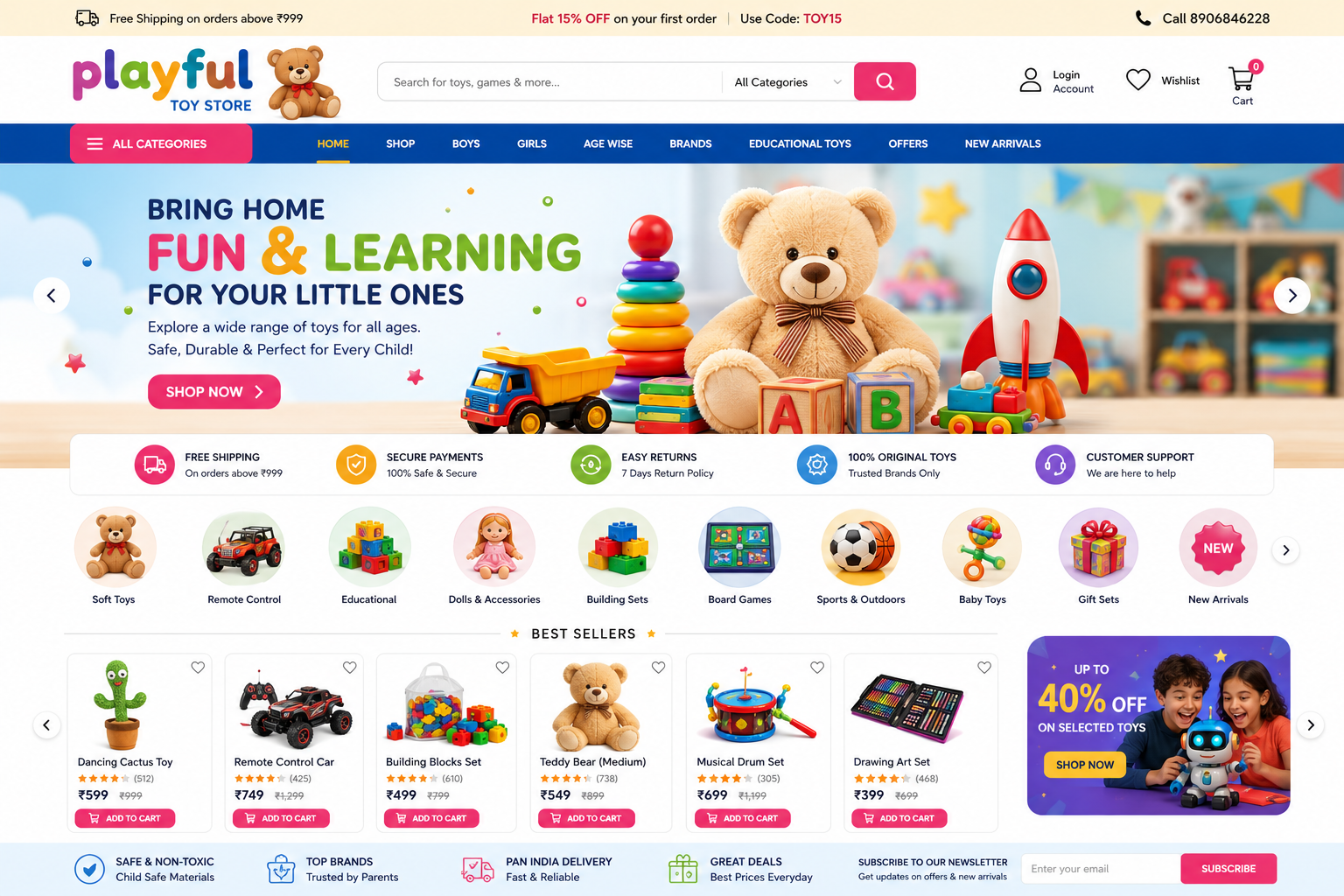
1. Attractive Homepage Design
Your homepage should create a fun and engaging experience.
Important homepage sections include:
- Featured toys
- Best sellers
- Educational toys
- New arrivals
- Festival offers
- Age-based toy collections
- Promotional banners
Bright colors and playful visuals work well for toy store websites.
2. Mobile Responsive Design
Most customers browse online stores using smartphones.
A responsive website provides:
- Better mobile shopping experience
- Faster browsing
- Improved Google rankings
- Higher conversion rates
Mobile optimization is essential for ecommerce success.
3. Organized Product Categories
Clear product categories improve user experience.
Popular toy categories include:
- Educational Toys
- Baby Toys
- Action Figures
- Board Games
- Building Blocks
- Dolls
- Outdoor Toys
- Remote Control Toys
- Puzzles
- Science Kits
Filters help customers sort products by:
- Age group
- Price
- Brand
- Gender
- Ratings
- Toy type
4. High-Quality Product Images
Toy buyers rely heavily on product visuals.
Use:
- HD product images
- Multiple viewing angles
- Zoom functionality
- Lifestyle photography
- Product demonstration videos
Professional visuals improve trust and increase sales.
5. Detailed Product Descriptions
Parents want clear information before purchasing toys.
Descriptions should include:
- Recommended age
- Product dimensions
- Material details
- Safety information
- Educational benefits
- Usage instructions
SEO-friendly descriptions improve Google rankings.
6. Secure Shopping Cart and Checkout
A simple checkout process improves customer satisfaction.
Essential features include:
- Guest checkout
- Multiple payment options
- Coupon support
- Shipping selection
- Order tracking
- Secure payment gateway
7. Wishlist Feature
Wishlist functionality allows users to save products for future purchases.
Benefits include:
- Better customer engagement
- Increased repeat visits
- Higher sales opportunities
8. Customer Reviews and Ratings
Reviews help parents make buying decisions.
Positive reviews improve:
- Product trust
- Conversion rates
- SEO performance
- Customer confidence
9. Inventory Management System
Real-time inventory tracking prevents overselling.
Features include:
- Stock notifications
- Product availability updates
- Automatic inventory sync
- Low-stock alerts
10. Social Media Integration
Toy businesses benefit greatly from social media marketing.
Integrate your website with:
- YouTube
Social sharing increases visibility and customer engagement.
Importance of SEO for Toy Store Ecommerce Websites
Search Engine Optimization (SEO) helps your toy store rank higher on Google and attract organic traffic.
Benefits of SEO
- More website visitors
- Better online visibility
- Increased product sales
- Reduced advertising costs
- Long-term business growth
SEO Tips for Toy Ecommerce Website Design
1. Use Toy-Related Keywords
Include keywords naturally throughout your website.
Examples:
- Toy store ecommerce website
- Online toy shop design
- Educational toy website
- Kids toy ecommerce website
- Toy store website development
2. Optimize Product Pages
Every product page should contain:
- SEO-friendly titles
- Meta descriptions
- Product schema
- Optimized images
- Keyword-rich descriptions
3. Improve Website Speed
Fast websites provide better user experience and improve SEO rankings.
Ways to improve speed:
- Compress images
- Use fast hosting
- Enable browser caching
- Minimize unnecessary code
4. Create Blog Content
Blogs help attract visitors and improve rankings.
Popular blog topics include:
- Best educational toys for kids
- Toy safety tips
- Learning through play
- Top toys for toddlers
- Gift ideas for children
5. Use Schema Markup
Schema markup improves visibility in Google search results.
Useful schema types:
- Product schema
- Review schema
- FAQ schema
- Breadcrumb schema
Latest Trends in Toy Store Ecommerce Website Design
Modern ecommerce websites focus on engagement and personalization.
1. Interactive Product Displays
360-degree product views and animations improve customer experience.
2. Video Integration
Product videos help customers understand toys better.
Examples include:
- Toy demonstrations
- Unboxing videos
- Educational toy tutorials
3. Personalized Recommendations
AI-powered systems recommend products based on browsing behavior and purchase history.
4. Gamified Shopping Experience
Interactive games and rewards increase engagement for children and parents.
5. Voice Search Optimization
Voice search is becoming increasingly popular among online shoppers.
Best Ecommerce Platforms for Toy Stores
Choosing the right ecommerce platform is important for scalability and performance.
1. Shopify
Best for:
- Easy setup
- Secure hosting
- Fast performance
Features:
- Toy store themes
- Mobile responsiveness
- App integrations
2. WooCommerce
Ideal for WordPress users.
Benefits include:
- SEO-friendly structure
- Flexible customization
- Affordable pricing
3. Magento
Suitable for large toy businesses.
Features:
- Advanced ecommerce tools
- Multi-store functionality
- High scalability
4. OpenCart
A lightweight ecommerce platform for small and medium toy stores.
Payment Gateway Integration for Toy Ecommerce Websites
Secure payment methods build customer trust.
Popular gateways include:
- Razorpay
- PayPal
- Stripe
- Paytm
- PhonePe
Important features:
- SSL security
- Fast payment processing
- Multiple payment options
Importance of Mobile Shopping
Most parents shop online using smartphones.
A mobile-friendly website should provide:
- Fast loading speed
- Easy navigation
- Mobile checkout
- Touch-friendly design
Google also prioritizes mobile-first websites in search rankings.
Security Features for Toy Ecommerce Websites
Customer security is extremely important for online businesses.
Important security measures include:
- SSL certificates
- Secure payment systems
- Malware protection
- Strong password encryption
- Regular website updates
Digital Marketing Strategies for Toy Ecommerce Websites
Marketing plays a major role in increasing online toy sales.
1. Social Media Marketing
Toy products perform well on visual platforms.
Focus on:
- Instagram reels
- Facebook ads
- YouTube toy videos
- Pinterest toy collections
2. Influencer Marketing
Parenting bloggers and kid influencers can help promote toys effectively.
3. Google Ads
Google Shopping Ads help attract customers searching for toys online.
4. Email Marketing
Email campaigns help retain customers.
Send:
- Festival offers
- Birthday discounts
- New arrivals
- Educational toy recommendations
User Experience in Toy Ecommerce Website Design
User experience directly impacts sales and customer satisfaction.
Important UX features include:
- Fast website speed
- Easy navigation
- Attractive visuals
- Simple checkout process
- Clear product details
A smooth shopping experience encourages repeat purchases.
Common Mistakes to Avoid
1. Slow Website Speed
Slow websites frustrate users and reduce conversions.
2. Poor Product Images
Low-quality visuals reduce trust and professionalism.
3. Complicated Checkout
Too many checkout steps increase cart abandonment.
4. Lack of Mobile Optimization
Ignoring mobile users can significantly reduce sales.
5. Weak SEO Strategy
Without SEO, your toy website may struggle to attract organic traffic.
How Toy Ecommerce Websites Increase Sales
A professionally designed toy ecommerce website helps:
- Build customer trust
- Improve shopping experience
- Increase online visibility
- Encourage repeat purchases
- Showcase products effectively
Features like upselling and cross-selling also increase average order value.
Why Professional Website Design Matters
Professional website design creates a strong first impression.
Experienced web designers ensure:
- Attractive layouts
- SEO optimization
- Mobile responsiveness
- Fast loading speed
- Secure functionality
A premium design helps your toy business stand out in a competitive market.
Future of Toy Ecommerce Websites
The toy ecommerce industry continues evolving with technology.
Future trends include:
- AI-based recommendations
- Augmented reality toys
- Voice-assisted shopping
- Personalized learning toys
- Interactive ecommerce experiences
Businesses adopting modern technology gain a competitive advantage.
Tips to Choose the Right Ecommerce Website Design Company
Before hiring a web design company, consider:
- Ecommerce experience
- Portfolio quality
- SEO expertise
- Mobile design capability
- Client reviews
- Technical support services
Choose a company that understands ecommerce functionality and user experience.
Conclusion
Toy store ecommerce website design is essential for modern toy businesses looking to grow online. A colorful, mobile-friendly, SEO-optimized, and user-focused website helps attract customers, improve trust, and increase sales.
From engaging product displays and secure payment systems to digital marketing integration and personalized shopping experiences, every feature contributes to business growth and customer satisfaction.
Whether you are launching a new toy brand or upgrading an existing toy shop, investing in professional ecommerce website design can help your business achieve long-term success in the competitive online marketplace.
A well-designed toy ecommerce website not only improves online visibility but also creates memorable shopping experiences for parents and children alike.
Frequently Asked Questions (FAQs)
1. Why does a toy store need an ecommerce website?
An ecommerce website helps toy stores reach more customers, increase online sales, and build brand recognition.
2. Which platform is best for toy ecommerce websites?
Shopify, WooCommerce, and Magento are popular choices depending on business size and requirements.
3. How important is mobile responsiveness?
Very important because most customers shop through smartphones and tablets.
4. What features should a toy ecommerce website include?
Important features include product galleries, filters, secure checkout, reviews, mobile responsiveness, and SEO optimization.
5. How can SEO help toy ecommerce websites?
SEO improves Google rankings, increases organic traffic, and attracts potential buyers.
6. Why are product videos useful?
Videos help customers understand products better and improve buying confidence.
7. What payment gateways should be integrated?
Popular options include Razorpay, PayPal, Stripe, Paytm, and PhonePe.
8. How can social media help toy businesses?
Social media platforms increase product visibility, customer engagement, and website traffic.
9. What are the latest trends in toy ecommerce websites?
Popular trends include AI recommendations, AR experiences, gamification, and personalized shopping.
10. Why should I hire a professional website design company?
Professional designers create attractive, secure, SEO-friendly, and conversion-focused ecommerce websites.
Call : +91 8906846228
Our Services
Website & Mobile App Development
Mobile App Development
Digital Marketing
Search Engine Optimization (SEO)
Software Development
IT Solutions
Recent Post