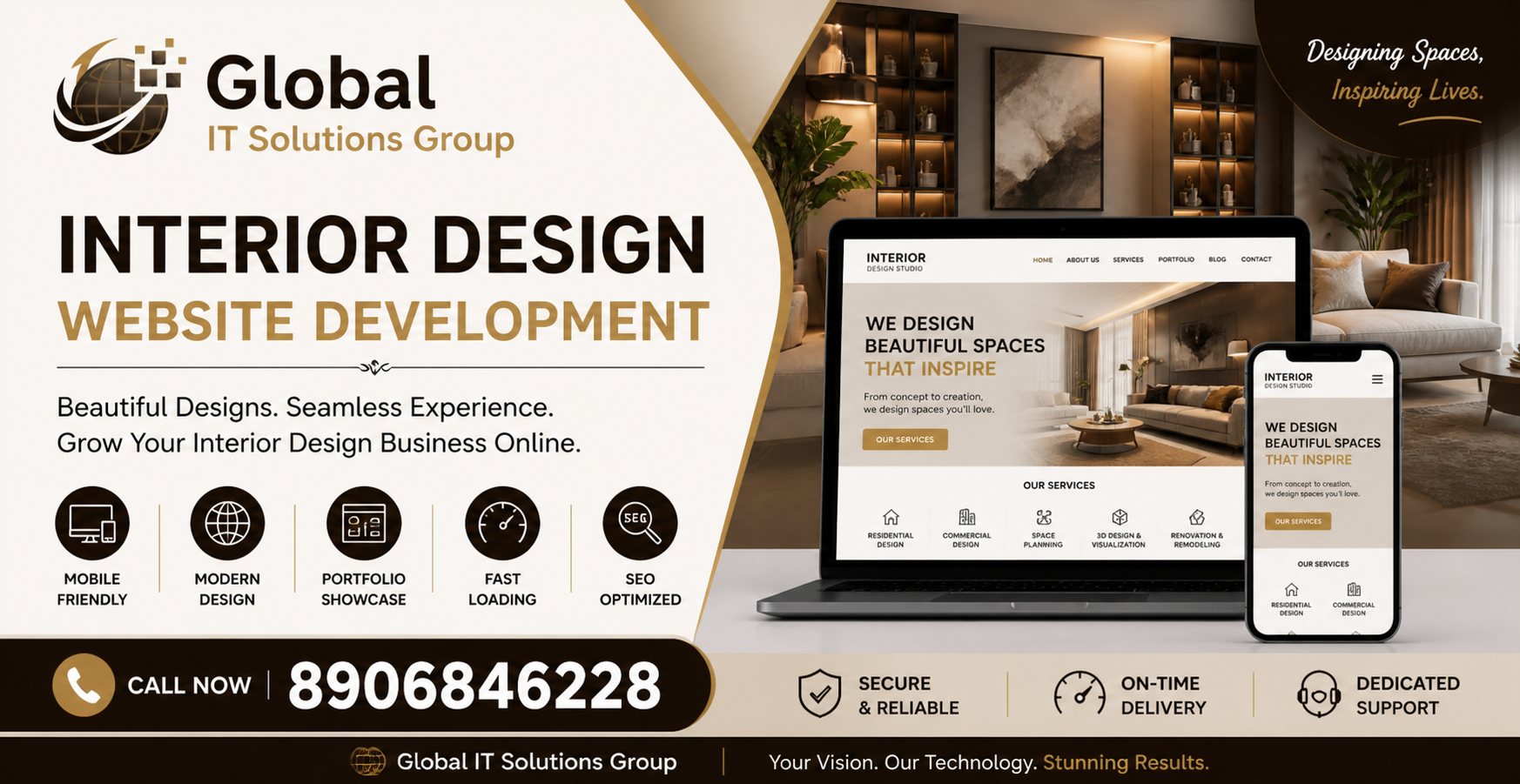
Interior Design Website Tips to Get Clients
Introduction
In today’s visually driven and highly competitive market, interior design clients don’t just rely on referrals—they search online, explore portfolios, compare styles, and evaluate designers before making a decision. This makes your website one of the most powerful tools to attract and convert potential clients.
A well-designed interior design website not only showcases your creativity but also builds trust, communicates your expertise, and turns visitors into paying clients.
In this guide, we will explore proven interior design website tips to help you get more clients and grow your business.
1. Showcase a Stunning Visual Portfolio
Interior design is a highly visual industry, so your portfolio should be the highlight of your website.
Tips:
- Use high-resolution images
- Display before-and-after transformations
- Organize projects by category (residential, commercial, office)
A strong portfolio instantly builds trust and credibility.
2. Create a Strong First Impression
Your homepage should immediately reflect your design style and professionalism.
Include:
- Eye-catching banner images
- Clear tagline (e.g., “Transforming Spaces into Beautiful Living Experiences”)
- Strong call-to-action (CTA)
3. Mobile-Friendly Design
Most users browse websites on mobile devices.
Ensure:
- Responsive layout
- Easy navigation
- Fast loading speed
4. Fast Loading Speed
Heavy images can slow down your website.
Optimize By:
- Compressing images
- Using fast hosting
- Lazy loading images
5. Clear Services Section
Explain what services you offer.
Examples:
- Home interior design
- Office design
- Modular kitchen design
- Renovation services
Clear service details help users understand your offerings.
6. Add Client Testimonials
Social proof builds trust.
Include:
- Client feedback
- Project success stories
7. Strong Call-to-Action (CTA)
Guide visitors to take action.
Examples:
- Get Free Consultation
- Request Quote
- Book Appointment
8. About Us Page with Storytelling
Share your journey, experience, and vision.
This helps build emotional connection with clients.
9. Contact Page with Easy Access
Make it easy for clients to reach you.
Include:
- Phone number
- Contact form
- Google Maps
10. SEO Optimization
Use keywords like “interior designer in [city]”.
Optimize titles, meta descriptions, and content.
11. Blog Section for Content Marketing
Share design tips and ideas.
Blog Ideas:
- Latest interior trends
- Small space design tips
- Budget-friendly decor ideas
12. Social Media Integration
Connect your website with Instagram and Pinterest.
13. Highlight Unique Selling Points (USP)
Show what makes you different.
Examples:
- Customized designs
- Affordable pricing
- Experienced team
14. Use Video Content
Videos increase engagement.
Ideas:
- Project walkthroughs
- Design process videos
15. Secure Website (HTTPS)
Security builds trust.
16. Analytics and Optimization
Track user behavior and improve continuously.
Conclusion
A well-designed interior design website is a powerful tool to attract and convert clients. By focusing on visuals, user experience, SEO, and trust-building elements, you can grow your interior design business effectively.
Final Thoughts
Your website is your digital portfolio and marketing engine. Invest in professional design and keep improving it to stay ahead in the competitive interior design industry.