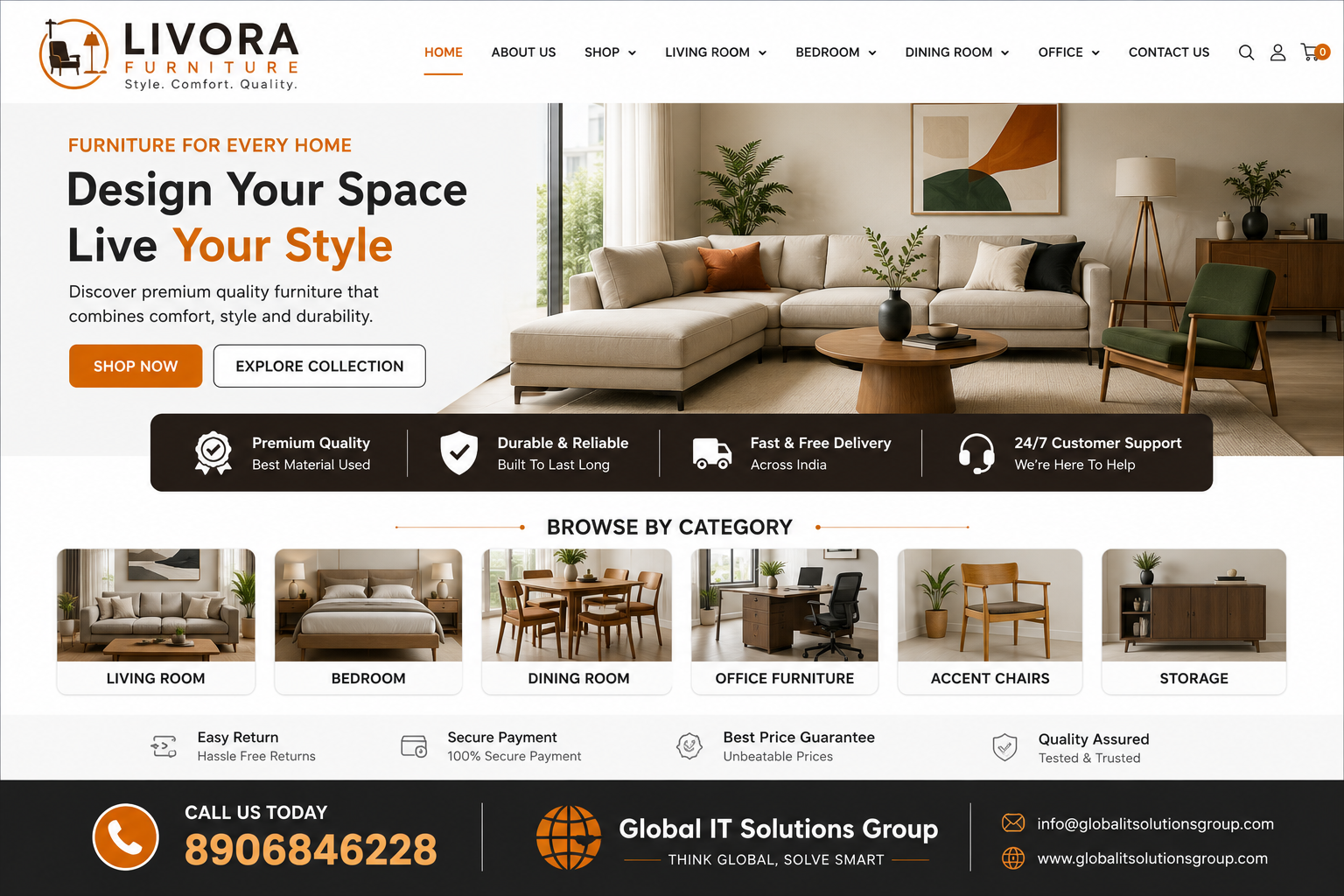
Furniture Store Website Creation: Complete Guide to Boost Sales and Attract More Customers
Introduction
In today’s digital era, customers don’t just walk into furniture stores—they browse online first. Whether they are looking for a modern sofa, a wooden dining table, or a custom wardrobe, most buyers research products, compare prices, and check reviews before making a purchase.
If your furniture store doesn’t have a professional website, you are missing out on a massive opportunity to showcase your products and increase sales. A well-designed furniture website acts as your digital showroom, open 24/7, helping you reach customers beyond your physical location.
This comprehensive guide will walk you through everything you need to know about furniture store website creation, including design ideas, essential features, SEO strategies, and tips to maximize conversions.
Why Your Furniture Store Needs a Website
A website is essential for growth in the modern retail market.
Key benefits:
- Showcases your product catalog online
- Attracts local and national customers
- Builds brand credibility
- Enables online sales and inquiries
- Works as a 24/7 sales platform
In a competitive market, a strong online presence can significantly boost your business.
Essential Features of a Furniture Store Website
Creating a successful furniture website requires a mix of design, functionality, and user experience.
1. Visually Appealing Design
Furniture is a visual product, so design matters a lot.
Design tips:
- Use large, high-quality images
- Maintain a clean and modern layout
- Use neutral color schemes (white, beige, grey)
- Highlight featured products
A visually attractive website keeps users engaged.
2. Mobile-Friendly Design
Most users browse furniture products on mobile devices.
Ensure:
- Responsive layout
- Smooth scrolling
- Easy navigation
- Fast loading speed
Mobile optimization improves both UX and SEO.
3. Fast Loading Speed
Speed impacts both user experience and rankings.
Improve speed by:
- Compressing images
- Using CDN
- Optimizing code
A slow website can lead to lost sales.
4. Product Catalog with Categories
Organize products into clear categories.
Examples:
- Living room furniture
- Bedroom furniture
- Office furniture
- Dining sets
- Outdoor furniture
Each product page should include:
- Product name
- Description
- Price
- Images
- Dimensions
- Materials
- “Add to Cart” or “Enquiry” button
5. Advanced Search and Filters
Help users find products easily.
Include filters like:
- Price range
- Material (wood, metal, etc.)
- Style (modern, classic)
- Color
6. Shopping Cart & Payment Gateway
Enable online purchases.
Include:
- Secure checkout
- Multiple payment options (UPI, cards, wallets)
- Order tracking
7. High-Quality Images & Videos
Visual content is crucial.
Use:
- Multiple angles of products
- Zoom-in feature
- Lifestyle images (furniture in rooms)
- Product videos
8. Customer Reviews & Ratings
Social proof increases trust.
Add:
- Product reviews
- Star ratings
- Customer photos (if possible)
9. Contact Information
Make it easy to connect.
Include:
- Phone number
- Store address
- Google Maps
10. Wishlist Feature
Allow users to save products for later.
SEO Strategies for Furniture Websites
SEO helps bring organic traffic and potential buyers.
1. Keyword Optimization
Target keywords like:
- Furniture store near me
- Buy sofa online India
- Wooden furniture shop in Kolkata
2. On-Page SEO
Optimize:
- Product titles and descriptions
- Meta tags
- Image alt text
- URLs
3. Product Page SEO
Each product page should:
- Have unique descriptions
- Include keywords naturally
- Provide detailed specifications
4. Blog Content Strategy
Blogging attracts more traffic.
Topic ideas:
- Furniture buying guide
- Interior design tips
- Best furniture for small spaces
- Wood vs metal furniture comparison
5. Technical SEO
Ensure:
- Fast loading speed
- Mobile responsiveness
- Secure HTTPS
- Clean structure
Conversion Optimization Tips
Turn visitors into buyers.
1. Strong Call-to-Action (CTA)
Use clear CTAs:
- Buy Now
- Add to Cart
- Get Best Price
2. Discounts and Offers
Attract customers with deals:
- Seasonal discounts
- Festival offers
- Free delivery
3. Trust Signals
Include:
- Secure payment badges
- Return policy
- Warranty information
4. Live Chat or WhatsApp Integration
Help customers quickly.
Design Ideas for Furniture Websites
Make your website stand out.
1. Minimalist Design
Focus on product visibility.
2. Grid Layout
Clean product display.
3. Lifestyle Imagery
Show furniture in real homes.
4. Video Backgrounds
Enhance visual appeal.
5. Sticky Cart Button
Easy access to cart.
Common Mistakes to Avoid
Avoid these issues:
- Poor image quality
- Slow loading speed
- Complicated navigation
- Lack of SEO
- No clear CTA
- Missing product details
Cost of Furniture Website Creation
Costs vary depending on features.
Basic Website:
₹10,000 – ₹20,000
Professional E-commerce Website:
₹20,000 – ₹70,000
Advanced Website:
₹70,000 – ₹2,00,000+
How to Choose the Right Web Design Company
Choose wisely.
Look for:
- E-commerce experience
- SEO expertise
- Portfolio
- Support services
Future Trends in Furniture Websites
Stay ahead with modern features:
- AR (Augmented Reality) furniture preview
- AI recommendations
- Voice search
- Personalized shopping experience
Conclusion
A well-designed furniture store website is a powerful tool to attract customers, showcase products, and increase sales. It acts as your digital showroom and helps you reach a wider audience.
By focusing on design, essential features, SEO strategies, and conversion optimization, you can create a website that drives real business growth.
In a competitive market, your website can be the key to standing out and boosting your sales.
Call : +91 8906846228
Our Services
Website Design & Development
Mobile App Development
Digital Marketing
Search Engine Optimization (SEO)
Software Development
IT Solutions
Recent Post