Freelancer Website Design: Complete Guide to Build a Professional Freelance Website
In today’s digital economy, freelancers need more than just skills to succeed. A professional freelancer website helps build credibility, attract clients, showcase expertise, and generate consistent business opportunities. Whether you are a web designer, developer, content writer, digital marketer, graphic designer, SEO specialist, video editor, consultant, or photographer, your website acts as your online portfolio and marketing platform.
Many clients now search online before hiring freelancers. A professionally designed freelance website helps you stand out from competitors and create a strong personal brand. It also gives you complete control over how your services, portfolio, testimonials, and pricing are presented.
This comprehensive guide explains everything about freelancer website design, including essential features, SEO strategies, branding tips, portfolio optimization, mobile responsiveness, lead generation, and best practices to build a high-converting freelance website.
Why Freelancers Need a Professional Website
Freelance marketplaces are highly competitive. Relying only on platforms like Fiverr, Upwork, or Freelancer can limit your growth because of platform fees and competition.
A personal freelance website helps you:
- Build a professional brand
- Attract direct clients
- Increase credibility
- Showcase portfolio projects
- Improve Google visibility
- Generate leads organically
- Display testimonials
- Sell services independently
- Increase pricing authority
- Grow long-term business
A website gives freelancers complete ownership over their online presence.
Benefits of Freelancer Website Design
A professional freelancer website offers many business advantages.
1. Better First Impression
Your website creates the first impression for potential clients. A modern design instantly builds trust and professionalism.
2. Direct Lead Generation
Freelance websites help generate inquiries through:
- Google search traffic
- Social media
- Referral traffic
- Content marketing
- SEO rankings
Direct leads reduce dependency on freelance marketplaces.
3. Strong Personal Branding
Your website reflects your personality, expertise, and unique value.
Strong branding helps clients remember your services.
4. Better Conversion Rates
A well-designed website can convert visitors into paying clients using:
- Strong call-to-actions
- Portfolio displays
- Testimonials
- Contact forms
- Clear service descriptions
Essential Features of Freelancer Website Design
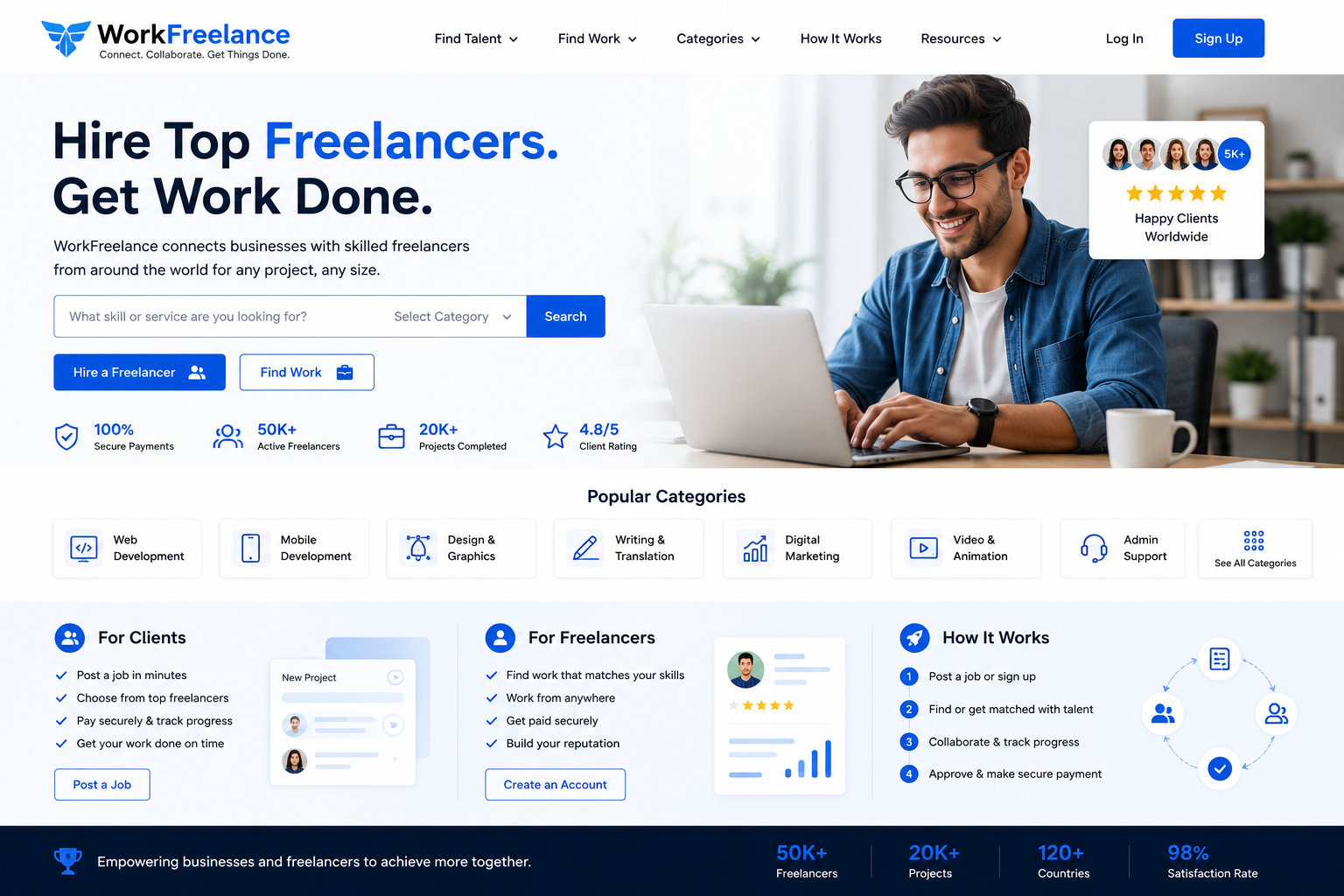
A successful freelancer website should combine attractive design, user-friendly navigation, SEO optimization, and conversion-focused elements.
Professional Homepage Design
Your homepage should immediately explain:
- Who you are
- What services you offer
- Why clients should hire you
- How to contact you
Important homepage sections include:
- Hero banner
- Professional introduction
- Services overview
- Portfolio highlights
- Testimonials
- CTA buttons
- Contact information
Example headline:
“Professional Freelance Web Designer Helping Businesses Grow Online”
About Me Section
Clients want to know the person behind the services.
Your About page should include:
- Professional background
- Skills and expertise
- Experience
- Achievements
- Work process
- Certifications
- Personal story
A strong About section builds trust and emotional connection.
Portfolio Showcase
Portfolio pages are one of the most important sections for freelancers.
Showcase your:
- Previous projects
- Case studies
- Client results
- Before-and-after examples
- Screenshots
- Videos
- Design samples
High-quality portfolio presentation increases conversions significantly.
Service Pages
Create separate pages for every service you offer.
Examples include:
- Website design
- Graphic design
- SEO services
- Digital marketing
- Content writing
- App development
- Video editing
- Branding services
Dedicated pages improve SEO and help clients understand your expertise clearly.
Mobile-Friendly Freelancer Website Design
Most visitors browse websites using mobile devices.
A mobile-responsive website ensures:
- Better user experience
- Higher Google rankings
- Faster navigation
- Improved conversions
Your freelance website should work perfectly on:
- Smartphones
- Tablets
- Laptops
- Desktop devices
Responsive design is essential for modern websites.
Fast Loading Speed
Website speed affects both SEO and user experience.
Slow websites can reduce inquiries and increase bounce rates.
Ways to improve speed:
- Optimized images
- Fast hosting
- Lightweight coding
- Browser caching
- CDN integration
- Optimized themes
Fast-loading websites improve engagement and rankings.
SEO Optimization for Freelancer Websites
SEO helps freelancers attract clients organically from Google.
A properly optimized freelancer website can generate consistent leads without paid advertising.
Important Freelancer SEO Keywords
Examples include:
- Freelancer website design
- Freelance web designer
- Freelance graphic designer
- SEO freelancer
- Content writer freelancer
- Freelance developer
- Hire freelance designer
- Professional freelancer website
Use keywords naturally in:
- Page titles
- Headings
- URLs
- Meta descriptions
- Blog content
- Image alt tags
Local SEO for Freelancers
Freelancers targeting local clients should optimize for local SEO.
Examples:
- Freelance web designer in Kolkata
- SEO freelancer in Delhi
- Graphic designer in Mumbai
- Website developer in Bangalore
Local SEO strategies include:
- Google Business Profile
- Local keywords
- City-specific landing pages
- Customer reviews
- Google Maps integration
Local SEO helps freelancers attract nearby business clients.
Importance of Personal Branding
Strong personal branding differentiates freelancers from competitors.
Branding elements include:
- Professional logo
- Consistent color palette
- Typography
- Personal photography
- Brand messaging
A memorable brand increases trust and recognition.
Best Color Schemes for Freelancer Websites
Popular freelancer website colors include:
- Blue for professionalism
- Black for premium branding
- White for minimalist design
- Purple for creativity
- Green for growth and innovation
Choose colors that match your industry and personality.
Contact Forms and Lead Generation
Your website should make contacting you easy.
Important lead generation elements include:
- Contact forms
- WhatsApp integration
- Email buttons
- Call scheduling
- Consultation booking
- Live chat support
Simple contact systems improve inquiry rates.
Testimonials and Client Reviews
Client reviews build trust and social proof.
Display:
- Written testimonials
- Video reviews
- Client logos
- Star ratings
- Project success stories
Trust signals significantly improve conversions.
Freelancer Website Navigation
Good navigation improves user experience.
Recommended menu structure:
- Home
- About
- Services
- Portfolio
- Blog
- Testimonials
- Contact
Clear navigation helps visitors find information quickly.
Blog Content for Freelancers
Blogging improves SEO and establishes authority.
Useful blog topics include:
- Freelance business tips
- Website design trends
- SEO strategies
- Content marketing guides
- Branding advice
- Productivity tips
- Social media marketing
- Client acquisition methods
Blogs increase organic traffic over time.
Importance of Call-to-Action Buttons
CTA buttons guide users toward conversion.
Examples include:
- Hire Me
- Get Free Quote
- Schedule Consultation
- Contact Now
- Start Project
- View Portfolio
Place CTAs strategically throughout the website.
Social Media Integration
Social media helps freelancers build visibility and authority.
Useful platforms include:
- Behance
- Dribbble
- YouTube
Social integration increases audience engagement.
Freelancer Website Design Trends
Modern freelance websites use advanced design trends such as:
- Minimalist layouts
- Dark mode
- Interactive animations
- Video backgrounds
- Micro interactions
- Personal branding visuals
- AI chatbots
- Mobile-first interfaces
Modern design improves user engagement.
Importance of Security Features
Freelancer websites should include:
- SSL certificates
- Secure hosting
- Spam protection
- Website backups
- Firewall security
Security improves trust and protects data.
Custom Freelancer Website Design vs Templates
Custom-designed websites provide:
- Unique branding
- Better SEO
- Faster performance
- Scalability
- Improved UX
- Stronger visual identity
Templates are cheaper, but custom websites offer better long-term value.
Conversion Optimization Tips for Freelancers
To improve client inquiries:
- Use strong headlines
- Display testimonials
- Simplify forms
- Improve speed
- Add trust indicators
- Showcase portfolio
- Use clear CTAs
- Optimize for mobile
Conversion optimization increases ROI from website traffic.
Common Freelancer Website Mistakes
Avoid these common problems:
Poor Portfolio Presentation
Weak portfolio sections reduce trust.
Slow Website Speed
Slow websites frustrate visitors.
No SEO Optimization
Without SEO, potential clients may never find your website.
Weak Branding
Generic design reduces memorability.
Complicated Navigation
Complex menus hurt user experience.
Missing Contact Information
Clients should easily contact you.
Best Pages for Freelancer Websites
Important website pages include:
- Home
- About Me
- Services
- Portfolio
- Blog
- Testimonials
- FAQ
- Contact Us
- Privacy Policy
Well-structured websites improve SEO and conversions.
Why WordPress is Popular for Freelancer Websites
WordPress is widely preferred because it offers:
- Easy customization
- SEO plugins
- Responsive themes
- Portfolio functionality
- Blogging support
- Scalability
WordPress is ideal for freelancers wanting flexibility and easy management.
AI and Automation for Freelancer Websites
Modern freelancer websites increasingly use:
- AI chatbots
- Automated booking systems
- Email automation
- Smart forms
- Analytics tools
Automation improves productivity and lead management.
Importance of Analytics and Tracking
Analytics tools help freelancers understand website performance.
Track metrics such as:
- Traffic sources
- Bounce rate
- Conversion rate
- Popular pages
- User behavior
Google Analytics and Search Console are highly useful.
Choosing the Right Freelancer Website Design Company
Before hiring a designer or agency, check:
- Portfolio quality
- SEO expertise
- Mobile responsiveness
- Speed optimization
- Branding capability
- Technical support
- Industry experience
A professional website partner helps build a high-performing freelance brand.
Future of Freelancer Website Design
Freelancer websites continue evolving with technology.
Future trends include:
- AI-powered portfolios
- Personalized user experiences
- Voice search optimization
- Interactive websites
- Video-first content
- Automation tools
Freelancers adopting modern technologies gain competitive advantages.
Conclusion
A professional freelancer website is one of the most important investments for long-term business growth. It helps freelancers build authority, attract direct clients, improve credibility, showcase portfolios, and generate consistent leads.
Whether you are a designer, developer, marketer, consultant, writer, or creative professional, your website should reflect your expertise and personal brand. A successful freelancer website combines modern design, SEO optimization, mobile responsiveness, fast performance, and strong conversion strategies.
Investing in high-quality freelancer website design can significantly improve your visibility, client acquisition, and professional success in the digital marketplace.
FAQs – Freelancer Website Design
1. Why do freelancers need a website?
A website helps freelancers build credibility, showcase portfolios, attract direct clients, and grow their personal brand.
2. What should a freelancer website include?
Important sections include portfolio, services, testimonials, about page, blog, and contact forms.
3. Is SEO important for freelancer websites?
Yes. SEO helps freelancers attract organic traffic and generate leads from Google searches.
4. Should freelancer websites be mobile-friendly?
Absolutely. Most users browse websites using smartphones and tablets.
5. What is the best platform for freelancer websites?
WordPress is highly popular because it is flexible, scalable, and SEO-friendly.
6. How does blogging help freelancers?
Blogging improves SEO, increases traffic, and establishes industry authority.
7. Why is portfolio presentation important?
A strong portfolio demonstrates skills and builds trust with potential clients.
8. What colors work best for freelancer websites?
Blue, black, white, purple, and green are commonly used depending on branding goals.
9. How can freelancer websites generate leads?
Through SEO, content marketing, social media integration, referrals, and strong CTAs.
10. Is custom website design better than templates?
Yes. Custom websites provide better branding, SEO performance, scalability, and user experience.
Call : +91 8906846228
Our Services
Website Design & Development
Mobile App Development
Digital Marketing
Search Engine Optimization (SEO)
Software Development
IT Solutions
Recent Post