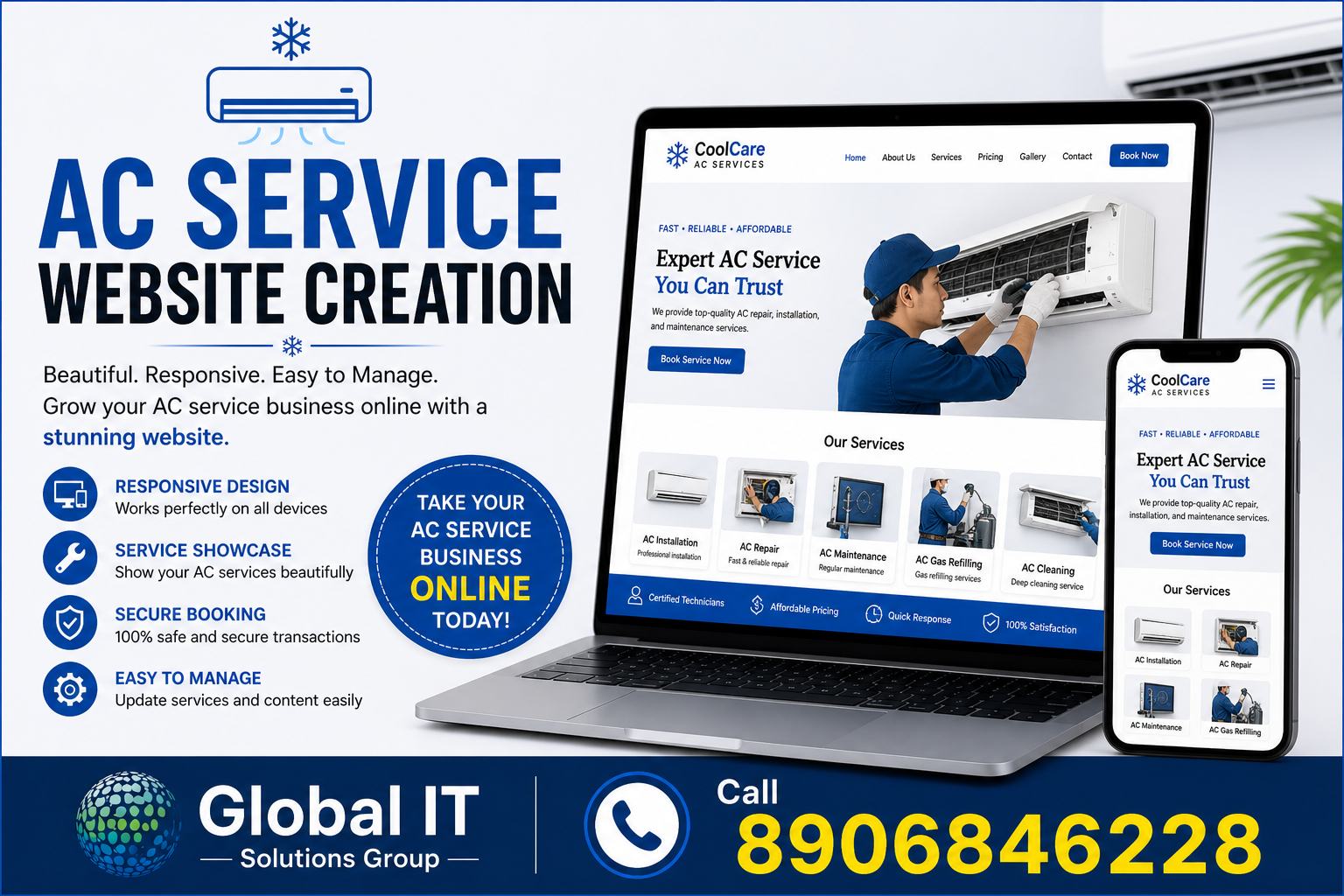
AC Service Website Design Tips: Build a Professional and High-Converting Service Website
In today’s digital-first world, customers rely heavily on online platforms to find reliable home services, including air conditioning repair and maintenance. Whether someone needs urgent AC repair during summer or routine servicing, the first place they turn to is a search engine.
For AC service businesses, a well-designed website is not just an online presence—it is a powerful tool to generate leads, build trust, and convert visitors into customers.
In this guide, we’ll explore the most effective AC service website design tips to help you create a professional, user-friendly, and high-converting website.
Why Website Design Matters for AC Service Businesses
Unlike eCommerce stores, AC service websites are focused on lead generation rather than direct product sales. Customers visit your site looking for quick information, trust signals, and an easy way to contact you.
A well-designed website can:
- Build credibility and trust
- Generate more service inquiries
- Improve local search visibility
- Increase customer engagement
- Boost conversions
On the other hand, a poorly designed website can make your business look unprofessional and unreliable.
1. Clean and Professional Layout
First impressions matter. Your website should have a clean, organized, and professional design.
Key elements:
- Simple layout with clear sections
- Consistent color scheme
- Easy-to-read fonts
Why it works:
A clutter-free design helps visitors focus on your services and take action quickly.
2. Mobile-Friendly Design
Most users search for AC services on their smartphones, especially during emergencies.
Important features:
- Responsive design
- Clickable phone numbers
- Fast loading pages
Benefit:
A mobile-friendly website ensures that users can easily contact you anytime, anywhere.
3. Fast Loading Speed
Speed is critical for retaining visitors.
If your website takes too long to load, users may leave and choose a competitor.
Tips:
- Optimize images
- Use lightweight design
- Choose reliable hosting
Result:
Faster websites improve user experience and search rankings.
4. Clear Call-to-Action (CTA)
Your website should guide visitors toward taking action.
Examples of CTAs:
- “Call Now”
- “Book Service”
- “Get a Free Quote”
Tips:
- Place CTAs prominently
- Use contrasting colors
- Keep the message simple
Impact:
Strong CTAs increase lead generation.
5. Highlight Your Services Clearly
Visitors should quickly understand what services you offer.
Common AC services:
- AC installation
- Repair and maintenance
- Gas refilling
- Annual servicing
Best practice:
Use separate sections or pages for each service.
6. Local SEO Optimization
AC services are location-based, so local SEO is essential.
Include:
- Your business address
- Service areas
- Location-based keywords
Benefit:
Helps your website rank higher in local search results.
7. Easy Contact Options
Make it easy for customers to reach you.
Include:
- Phone number
- Contact form
- Email address
- WhatsApp chat
Tip:
Keep contact options visible on every page.
8. Customer Reviews and Testimonials
Trust is crucial in service-based businesses.
Include:
- Customer testimonials
- Ratings
- Before-and-after images
Result:
Builds credibility and reassures potential customers.
9. Service Booking System
An online booking system can improve convenience.
Features:
- Appointment scheduling
- Time slot selection
- Confirmation notifications
Benefit:
Simplifies the booking process for customers.
10. Use of Real Images and Videos
Authenticity matters.
Include:
- Photos of your team
- Service process videos
- Real project images
Why it works:
Builds trust and shows professionalism.
11. Transparent Pricing Information
Customers appreciate transparency.
Options:
- Display starting prices
- Offer free quotes
- Provide service packages
Benefit:
Reduces hesitation and builds trust.
12. Emergency Service Highlight
Many AC issues are urgent.
Feature:
Highlight 24/7 or emergency services prominently.
Impact:
Attracts customers who need immediate help.
13. Simple Navigation
Navigation should be easy and intuitive.
Include:
- Clear menu
- Service categories
- Contact page
Result:
Improves user experience and reduces frustration.
14. Secure and Reliable Website
Security builds trust.
Include:
- SSL certificate
- Secure forms
Benefit:
Protects user data and enhances credibility.
15. Add Informative Content
Content marketing can help attract more visitors.
Ideas:
- AC maintenance tips
- Energy-saving guides
- Troubleshooting articles
Benefit:
Improves SEO and establishes authority.
16. Highlight Certifications and Experience
Show your expertise.
Include:
- Certifications
- Years of experience
- Awards
Result:
Builds trust and credibility.
17. Use of Icons and Visual Elements
Icons can make information easier to understand.
Examples:
- Service icons
- Feature highlights
Benefit:
Improves readability and visual appeal.
18. Integration with Maps
Help customers locate your business easily.
Include:
- Google Maps integration
- Directions
Benefit:
Improves local visibility and convenience.
19. Regular Updates and Maintenance
Keep your website updated.
Tasks:
- Update services
- Fix bugs
- Add new content
Result:
Ensures smooth performance.
20. Strong Branding
Your website should reflect your brand identity.
Focus on:
- Logo
- Colors
- Messaging
Outcome:
Creates a professional and memorable impression.
Final Thoughts
An effective AC service website should be simple, fast, and focused on user needs. The goal is to make it easy for customers to find information and contact you quickly.
By following these design tips, you can create a website that not only looks professional but also generates leads and grows your business.
Focus on user experience, trust, and convenience, and continuously improve your website based on customer feedback and industry trends.
Call : +91 8906846228
Our Services
Website Design & Development
Mobile App Development
Digital Marketing
Search Engine Optimization (SEO)
Software Development
IT Solutions
Recent Post