Restaurant Online Ordering Website Design: Complete Guide to Building a Successful Food Ordering Website
The restaurant industry has changed dramatically with the rise of online food ordering systems. Customers now prefer ordering food online through websites and mobile devices because it is convenient, fast, and user-friendly. Whether you own a restaurant, café, cloud kitchen, bakery, fast food outlet, or fine dining business, having a professional online ordering website is essential for business growth.
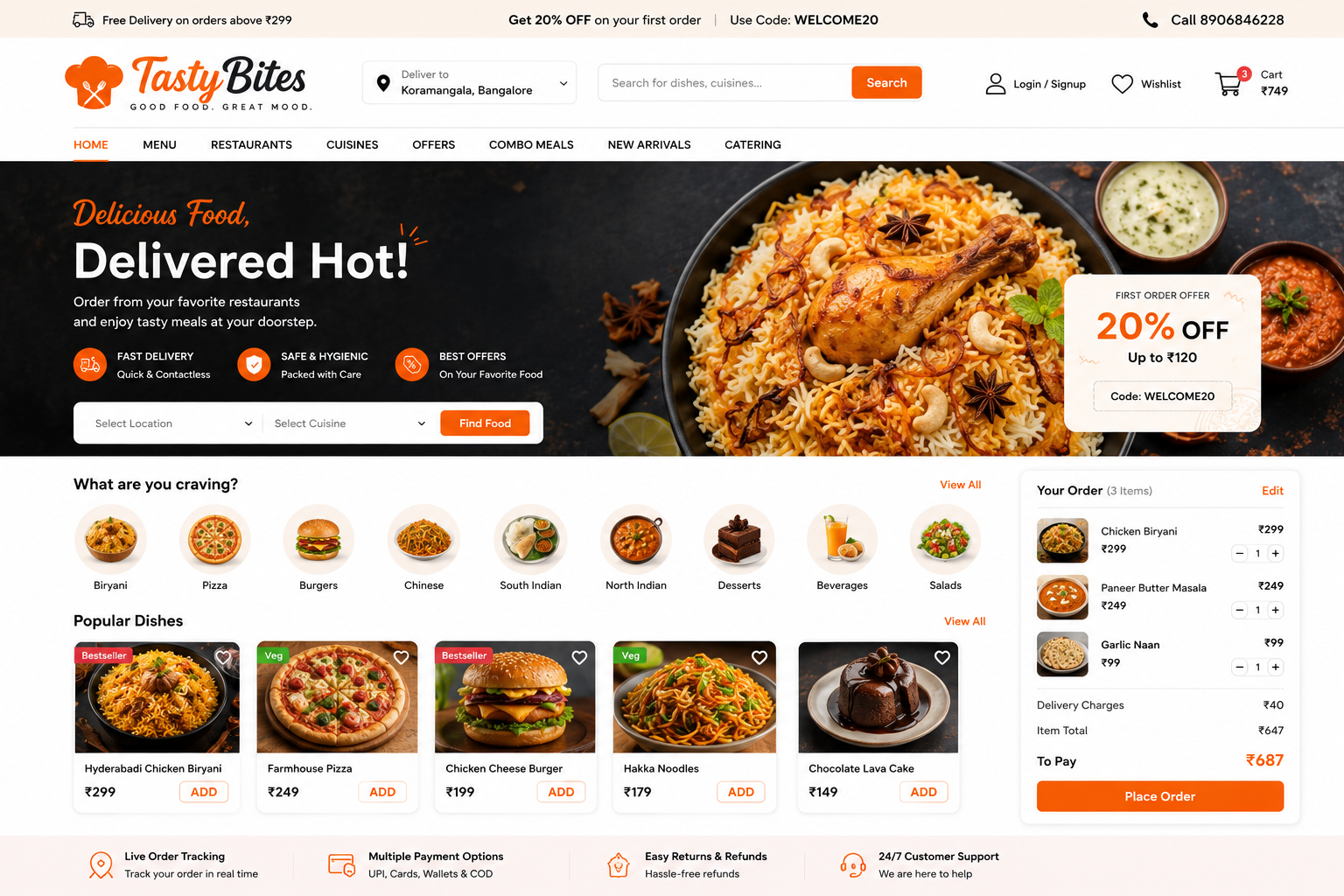
A restaurant online ordering website allows customers to browse menus, place orders, make payments, and track deliveries without using third-party food delivery apps. This helps restaurants build their own brand identity, improve customer relationships, and increase profits.
In this complete guide, you will learn everything about restaurant online ordering website design, including important features, SEO strategies, mobile optimization, payment integration, design trends, marketing ideas, and ways to increase online food sales.
Why Restaurants Need an Online Ordering Website
Food delivery apps may help restaurants gain visibility, but they also charge high commissions and reduce direct customer relationships. A dedicated restaurant website gives businesses full control over branding, pricing, promotions, and customer data.
Benefits of Restaurant Online Ordering Website Design
1. Increase Online Orders
A professionally designed website allows customers to order food directly from your restaurant.
2. Reduce Third-Party Commission Fees
Online ordering websites help restaurants avoid large commissions charged by food delivery platforms.
3. Build Strong Brand Identity
A custom website strengthens your restaurant brand and creates customer trust.
4. Improve Customer Experience
Fast ordering, secure payments, and easy navigation improve customer satisfaction.
5. Operate 24/7
Customers can browse menus and place future orders anytime.
Essential Features of Restaurant Online Ordering Website Design
A restaurant website should be visually appealing, fast, mobile-friendly, and easy to use.
1. Attractive Homepage Design
The homepage creates the first impression of your restaurant.
Important homepage elements include:
- Food banners
- Signature dishes
- Special offers
- Online order buttons
- Restaurant story
- Customer reviews
- Reservation section
High-quality food images make the website more attractive and increase customer engagement.
2. Mobile Responsive Design
Most food orders are placed using smartphones.
A responsive website provides:
- Better mobile experience
- Faster navigation
- Higher conversions
- Improved Google rankings
Mobile optimization is essential for restaurant websites.
3. Online Food Ordering System
The ordering system is the core feature of the website.
Important functions include:
- Menu browsing
- Add to cart
- Order customization
- Delivery options
- Pickup scheduling
- Real-time order confirmation
A simple ordering process improves customer satisfaction.
4. Digital Menu Management
Your website should display a well-organized digital menu.
Menu sections may include:
- Starters
- Main Course
- Fast Food
- Desserts
- Beverages
- Combo Meals
Each menu item should include:
- Food images
- Price
- Ingredients
- Spice level
- Dietary information
5. Secure Payment Gateway Integration
Customers expect secure and flexible payment options.
Popular payment methods include:
- UPI
- Credit cards
- Debit cards
- Net banking
- Wallet payments
- Cash on delivery
Secure payment systems increase trust and improve conversions.
6. Table Reservation System
Restaurants can also allow online table booking.
Reservation features may include:
- Date selection
- Time selection
- Guest count
- Confirmation notifications
7. Delivery Tracking System
Order tracking improves customer confidence.
Features include:
- Live delivery updates
- Delivery status notifications
- Estimated delivery time
8. Customer Reviews and Ratings
Positive reviews help build trust and attract new customers.
Reviews improve:
- Brand credibility
- SEO performance
- Customer confidence
9. Wishlist and Favorite Orders
Customers can save favorite meals for faster reordering.
Benefits include:
- Better user experience
- Increased repeat orders
- Higher customer retention
10. Social Media Integration
Social media plays a major role in restaurant marketing.
Integrate your website with:
- YouTube
Food content performs exceptionally well on social media platforms.
Importance of SEO for Restaurant Websites
Search Engine Optimization (SEO) helps restaurant websites rank higher on Google and attract more customers.
Benefits of SEO
- More website traffic
- Increased online orders
- Better local visibility
- Reduced advertising costs
- Long-term growth
SEO Tips for Restaurant Online Ordering Website Design
1. Use Restaurant Keywords
Include relevant keywords naturally throughout the website.
Examples:
- Restaurant online ordering website
- Food delivery website design
- Restaurant ecommerce website
- Online food ordering system
- Restaurant website development
2. Optimize Menu Pages
Each menu page should include:
- SEO-friendly titles
- Meta descriptions
- Keyword-rich content
- Optimized food images
3. Local SEO Optimization
Local SEO is extremely important for restaurants.
Important steps include:
- Google Business Profile optimization
- Local keywords
- Customer reviews
- Local schema markup
Examples:
- Best restaurant in Kolkata
- Online food delivery near me
- Restaurant website design company
4. Improve Website Speed
Fast-loading websites improve user experience and search rankings.
Ways to improve speed:
- Compress images
- Use quality hosting
- Enable caching
- Minimize scripts
5. Create Food Blog Content
Blogs help attract organic traffic.
Popular food blog topics include:
- Healthy eating tips
- Popular cuisines
- Restaurant recipes
- Food trends
- Best dishes for celebrations
Latest Trends in Restaurant Website Design
Modern restaurant websites focus on user engagement and visual appeal.
1. Minimalist Design
Simple layouts improve readability and focus on food items.
2. Video Backgrounds
Food preparation videos and restaurant ambiance videos improve engagement.
3. AI-Based Food Recommendations
AI can suggest dishes based on customer preferences and order history.
4. Voice Search Optimization
Voice search is growing rapidly for local food searches.
Examples:
- “Best pizza near me”
- “Order biryani online”
5. Dark Mode Design
Dark themes create a premium restaurant appearance.
Best Platforms for Restaurant Online Ordering Websites
Choosing the right platform is important for performance and scalability.
1. WordPress + WooCommerce
Ideal for restaurants looking for flexibility and SEO optimization.
Benefits:
- Easy customization
- Affordable
- Large plugin ecosystem
2. Shopify
Best for easy setup and secure hosting.
Features include:
- Mobile responsiveness
- Fast performance
- App integrations
3. Custom Web Development
Suitable for large restaurants and food chains needing advanced functionality.
4. OpenCart
A lightweight ecommerce solution for small and medium restaurants.
Importance of Mobile-Friendly Restaurant Websites
Most customers order food through mobile devices.
A mobile-friendly website should provide:
- Fast loading
- Easy menu browsing
- Mobile checkout
- Touch-friendly buttons
Google prioritizes mobile-first websites in rankings.
Security Features for Restaurant Websites
Online security is essential for customer trust.
Important security measures include:
- SSL certificates
- Secure payment gateways
- Malware protection
- Data encryption
- Regular updates
Digital Marketing Strategies for Restaurant Websites
Marketing helps attract customers and increase online orders.
1. Instagram Marketing
Food photography and reels perform exceptionally well.
Use:
- Food videos
- Behind-the-scenes clips
- Customer reviews
- Special offers
2. Facebook Advertising
Targeted ads help restaurants reach local customers.
3. Google Ads
Google Ads increase visibility for food-related searches.
4. Influencer Marketing
Food bloggers and local influencers help promote restaurants.
5. Email and SMS Marketing
Send:
- Discount offers
- Festival promotions
- Loyalty rewards
- New menu updates
User Experience in Restaurant Website Design
User experience directly affects online orders.
Important UX features include:
- Fast website speed
- Easy navigation
- Attractive visuals
- Simple checkout
- Clear menu structure
A smooth experience increases customer retention.
Common Mistakes to Avoid
1. Slow Website Speed
Slow websites reduce conversions and frustrate users.
2. Poor Food Photography
Low-quality images reduce customer interest.
3. Complicated Ordering Process
Complex ordering systems increase cart abandonment.
4. Lack of Mobile Optimization
Ignoring mobile users can significantly reduce sales.
5. Weak SEO Strategy
Without SEO, customers may struggle to discover your restaurant online.
How Restaurant Websites Increase Sales
A professional restaurant website helps:
- Increase direct online orders
- Improve customer loyalty
- Build brand recognition
- Reduce dependency on delivery apps
- Improve customer experience
Features like combo offers, upselling, and loyalty rewards further boost revenue.
Why Professional Website Design Matters
Professional web design creates a strong first impression and improves customer trust.
Experienced designers ensure:
- Attractive layouts
- Mobile responsiveness
- SEO optimization
- Fast loading speed
- Secure functionality
A premium website helps restaurants compete effectively in the digital market.
Future of Restaurant Online Ordering Websites
Restaurant technology continues evolving rapidly.
Future trends include:
- AI-powered food recommendations
- Voice ordering
- Chatbot customer support
- Contactless ordering
- Augmented reality food previews
Restaurants adopting new technology gain a competitive advantage.
Tips to Choose the Right Restaurant Website Design Company
Before hiring a website design company, consider:
- Restaurant website experience
- SEO expertise
- Portfolio quality
- Mobile design capability
- Technical support services
- Client reviews
Choose a company that understands food industry trends and online ordering systems.
Conclusion
Restaurant online ordering website design is essential for modern food businesses looking to grow online. A fast, mobile-friendly, visually appealing, and SEO-optimized website helps restaurants attract customers, increase direct orders, and improve customer satisfaction.
From digital menu systems and secure payments to social media integration and local SEO optimization, every feature contributes to business growth and online success.
Whether you own a café, restaurant, cloud kitchen, or bakery, investing in professional restaurant website design can help your business stand out in the competitive food industry.
A well-designed online ordering website not only improves sales but also strengthens customer relationships and builds long-term brand value.
Frequently Asked Questions (FAQs)
1. Why does a restaurant need an online ordering website?
An online ordering website helps restaurants increase direct sales, reduce commission fees, and improve customer experience.
2. Which platform is best for restaurant websites?
WordPress with WooCommerce, Shopify, and custom development are popular options.
3. How important is mobile responsiveness?
Very important because most food orders are placed using smartphones.
4. What features should a restaurant website include?
Important features include online ordering, digital menus, secure payments, table reservations, and mobile responsiveness.
5. How can SEO help restaurant websites?
SEO improves Google rankings, increases local visibility, and attracts more online orders.
6. Why are food images important?
High-quality food images increase customer interest and improve conversions.
7. What payment gateways should be integrated?
Popular options include Razorpay, PayPal, Stripe, Paytm, and PhonePe.
8. How can social media help restaurants?
Social media platforms increase visibility, customer engagement, and online traffic.
9. What are the latest restaurant website trends?
Popular trends include AI recommendations, voice ordering, dark mode, and video integration.
10. Why should I hire a professional website design company?
Professional designers create secure, SEO-friendly, mobile-responsive, and conversion-focused restaurant websites.
Call : +91 8906846228
Our Services
Website Design & Development
Mobile App Development
Digital Marketing
Search Engine Optimization (SEO)
Software Development
IT Solutions
Recent Post