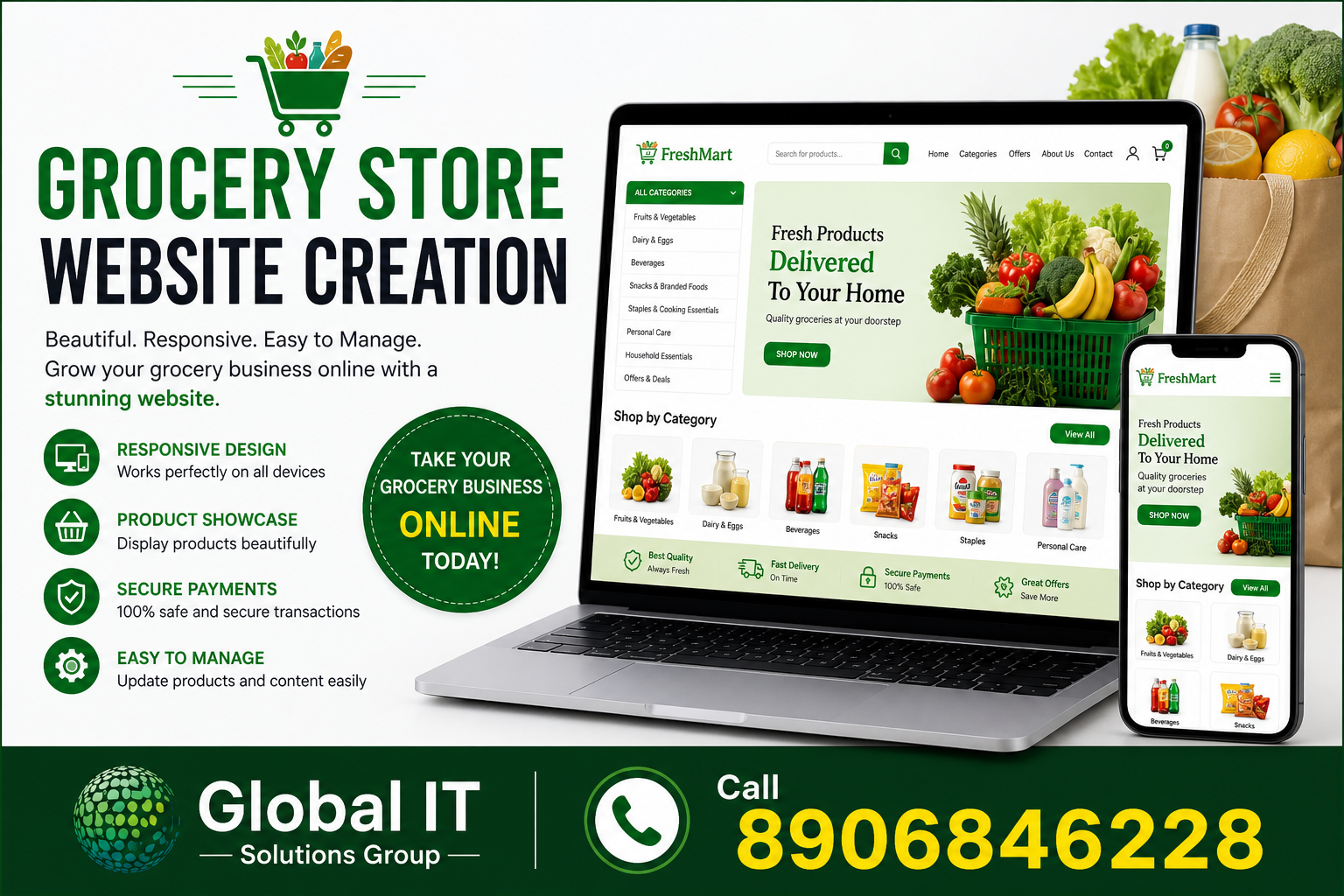
Grocery Store Website Design Tips: Build a Fast, User-Friendly, and High-Converting Online Store
The grocery industry has rapidly shifted toward digital platforms. Today, customers expect to browse products, compare prices, and place orders online with ease. Whether you run a local grocery shop or a large supermarket, having a well-designed website is essential to stay competitive.
A grocery store website is not just about listing products—it’s about providing convenience, speed, and a seamless shopping experience. Unlike other eCommerce websites, grocery platforms must handle frequent purchases, real-time inventory, and quick decision-making.
In this article, we’ll explore the most effective grocery store website design tips to help you create a modern, user-friendly, and high-performing online store.
Why Website Design Matters for Grocery Stores
Grocery shopping is often routine and time-sensitive. Customers want to quickly find items, add them to their cart, and complete the checkout process without any hassle.
A well-designed grocery website can:
- Improve customer satisfaction
- Increase repeat purchases
- Reduce cart abandonment
- Build trust and reliability
- Boost overall sales
If your website is slow, confusing, or difficult to navigate, users are likely to switch to competitors.
1. Prioritize Simple and Clean Layouts
Simplicity is key in grocery website design.
Customers visit grocery websites with a clear purpose—they want to find items quickly. A cluttered design can overwhelm users and make navigation difficult.
Best practices:
- Use a clean layout with clear sections
- Avoid excessive colors and elements
- Highlight important categories
Result:
A simple interface helps users complete their shopping faster and more efficiently.
2. Focus on Mobile-Friendly Design
A significant number of users shop for groceries on their smartphones.
A mobile-optimized website ensures that customers can easily browse and order items on the go.
Key features:
- Responsive design
- Large, tappable buttons
- Easy scrolling
- Mobile-friendly menus
Why it matters:
Convenience is the main reason people shop for groceries online, and mobile usability plays a huge role in that.
3. Fast Loading Speed is Essential
Speed is one of the most critical factors for grocery websites.
Users expect pages to load instantly. Even a few seconds of delay can lead to frustration and lost sales.
Tips to improve speed:
- Optimize images
- Use efficient coding
- Choose reliable hosting
- Enable caching
Impact:
A fast website improves user experience and search engine rankings.
4. Clear Product Categorization
Organizing products into clear categories is essential for easy navigation.
Examples of categories:
- Fruits and vegetables
- Dairy products
- Beverages
- Snacks
- Household essentials
Additional features:
- Subcategories for better organization
- Filters (price, brand, popularity)
Benefit:
Helps users find products quickly and reduces browsing time.
5. Powerful Search Functionality
A strong search feature is crucial for grocery websites.
Customers often know exactly what they need and prefer searching rather than browsing.
Features to include:
- Auto-suggestions
- Spell correction
- Search by brand or category
Result:
Improves user experience and speeds up the shopping process.
6. High-Quality Product Images and Details
Clear and informative product listings help customers make quick decisions.
Include:
- High-resolution images
- Product descriptions
- Pricing information
- Nutritional details (if applicable)
Tip:
Use consistent image styles for a professional look.
7. Easy Add-to-Cart and Quick Actions
Make it easy for users to add items to their cart.
Features:
- One-click add-to-cart buttons
- Quantity selectors
- Quick view options
Why it matters:
Reduces friction and speeds up the shopping process.
8. Smart Recommendations and Personalization
Personalization can enhance user experience and increase sales.
Examples:
- Frequently bought together
- Recommended products
- Recently purchased items
Benefit:
Encourages users to add more items to their cart.
9. Seamless Checkout Process
A complicated checkout process can lead to cart abandonment.
Best practices:
- Offer guest checkout
- Minimize form fields
- Provide multiple payment options
Additional features:
- Save addresses for future orders
- Show order summary clearly
Result:
Improves conversion rates and customer satisfaction.
10. Real-Time Inventory Updates
Out-of-stock items can frustrate customers.
Solution:
- Display real-time stock availability
- Show “out of stock” labels
- Suggest alternatives
Benefit:
Builds trust and avoids disappointment.
11. Delivery and Pickup Options
Flexibility in delivery is a major factor in grocery shopping.
Options to include:
- Home delivery
- Same-day delivery
- Scheduled delivery
- Store pickup
Why it matters:
Convenience increases customer loyalty.
12. Highlight Offers and Discounts
Customers often look for deals when shopping for groceries.
Display:
- Daily deals
- Discount banners
- Coupon codes
Tip:
Place offers prominently on the homepage.
13. User Accounts and Order History
Allow users to create accounts for a personalized experience.
Features:
- Save favorite items
- View order history
- Reorder previous purchases
Benefit:
Encourages repeat purchases and saves time for users.
14. Customer Reviews and Ratings
Reviews help customers make informed decisions.
Include:
- Product ratings
- Customer feedback
- Verified reviews
Impact:
Builds trust and credibility.
15. Integration with Local Delivery Systems
For local grocery stores, integrating delivery services can improve efficiency.
Examples:
- Local delivery tracking
- Real-time updates
- Estimated delivery times
16. Use of Visual Hierarchy
Organize content in a way that guides users naturally.
Techniques:
- Highlight important sections
- Use contrasting colors
- Arrange content logically
Result:
Improves usability and navigation.
17. Accessibility and Inclusive Design
Make your website accessible to all users.
Features:
- Readable fonts
- High contrast colors
- Screen reader compatibility
Importance:
Ensures a wider audience can use your website.
18. Secure Payment and Data Protection
Security is crucial for building trust.
Include:
- SSL certificates
- Secure payment gateways
- Privacy policies
Benefit:
Customers feel safe while making transactions.
19. Regular Updates and Maintenance
Keep your website updated with fresh content and features.
Examples:
- Update product listings
- Add new categories
- Fix bugs
Result:
Maintains performance and user engagement.
20. Add a Blog or Recipe Section
Content marketing can attract more visitors.
Ideas:
- Recipes using your products
- Healthy eating tips
- Grocery shopping guides
Benefit:
Improves SEO and engages customers.
Final Thoughts
Designing a grocery store website requires a strong focus on usability, speed, and convenience. Unlike other online stores, grocery websites must cater to frequent and time-sensitive purchases.
By implementing these design tips, you can create a website that is not only visually appealing but also efficient and user-friendly. The goal is to make grocery shopping as quick and effortless as possible.
A well-designed grocery website can help you attract more customers, increase sales, and build long-term loyalty in an increasingly competitive market.
Call : +91 8906846228
Our Services
Website Design & Development
Mobile App Development
Digital Marketing
Search Engine Optimization (SEO)
Software Development
IT Solutions
Recent Post